In short
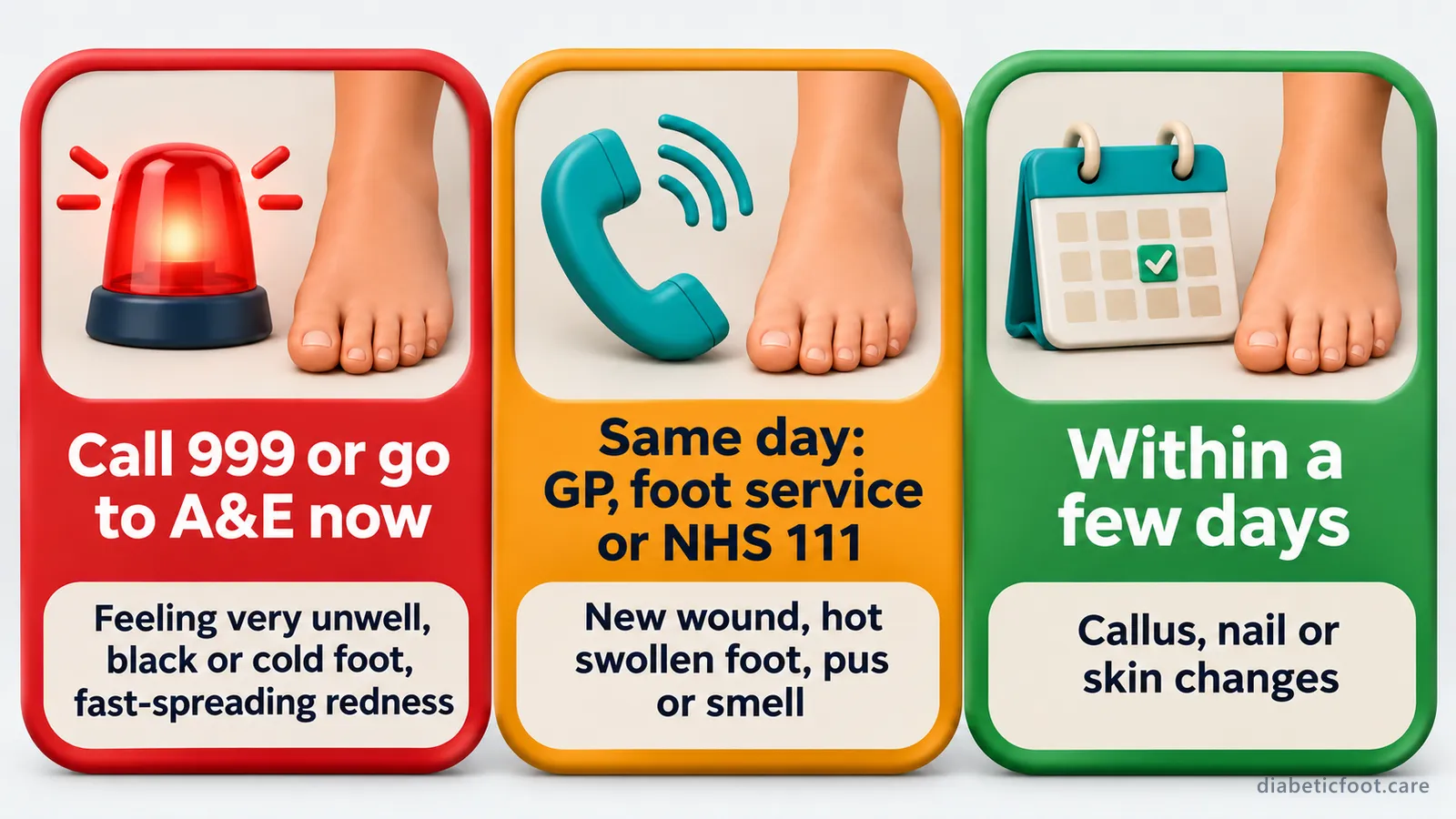
Treat it as a diabetic foot emergency and call 999 or go to A&E if a foot problem comes with signs of sepsis, such as fast breathing, confusion or blotchy skin, or if skin turns black or redness spreads fast. Contact your GP practice, foot protection service or NHS 111 the same day about a new wound, a hot swollen foot, discharge or a smell. Use local NHS services first; this website cannot assess emergencies.
A diabetic foot emergency is a foot problem that could threaten your leg or your life within hours or days. This page sorts warning signs into three levels so you can act quickly. It is for people anywhere in the UK and does not replace being seen by a health professional. If you are not sure, treat the problem as urgent and contact your local NHS services.
Call 999 or go to A&E now: diabetic foot emergency signs
Go now if you have a foot wound, a red or swollen foot or another diabetes-related foot problem, together with any of the following.
Signs of sepsis, the body's life-threatening reaction to an infection1:
- breathing very fast
- confusion, slurred speech or not making sense
- blue, pale or blotchy skin (on brown or black skin, this may be easier to see on the palms of the hands)
- a very high or very low temperature, feeling hot or cold to the touch, or shivering
- a rash that does not fade when you press it
Signs the foot itself is in danger234:
- redness or swelling spreading quickly up the foot or leg
- skin turning black, grey, purple or dark red
- a swollen, blistered, smelly or leaking area of dead tissue (wet gangrene)
- crackling under the skin
- sudden severe pain with a cold, pale or numb foot
NICE, which sets guidance for the NHS, says these need immediate hospital emergency care: an ulcer with a fever or signs of sepsis, deep infection, a very poor blood supply to the leg (limb ischaemia) and gangrene.2 Do not drive yourself. Ask someone to take you, or call 999.3
Same day: contact your GP practice, foot protection service or NHS 111
These problems need to be checked the same day, even if you feel well:
- a new ulcer, wound, cut or blister, or one that will not heal
- a foot that is red, hot or swollen, with or without pain
- pus, discharge or a new bad smell from a wound
- a wound that is getting bigger, deeper or more painful
- a toe that has become red and swollen
Who to contact the same day:
- your foot protection service or hospital foot team, if you are already under one
- your GP practice
- if you cannot reach them: NHS 111 online or by phone in England, NHS 111 Wales in Wales, or NHS 24 on 111 in Scotland56
- in Northern Ireland: your GP practice or, when it is closed, your local GP out-of-hours service8
Diabetes UK advises calling your GP or foot protection team straight away about anything new.5 NICE says any active diabetic foot problem should be referred to the hospital foot team (the multidisciplinary foot care service) or foot protection service within 1 working day. They should then decide how urgent it is within 1 more working day.2 NHS 111 can tell you where to get help, such as an urgent treatment centre or an out-of-hours GP.6
A hot, swollen foot with unbroken skin can be an infection or Charcot foot in diabetes, which affects the bones and joints. If Charcot foot is suspected, NICE advises keeping weight off the foot until specialist treatment can start.2
Within a few days: book an appointment
Contact your GP practice or podiatry service within a few days about:
- hard skin (callus) that is getting thicker or changing
- ingrown, thickened or discoloured toenails
- new numbness, tingling or burning in your feet5
These are not diabetic foot emergencies. But NICE counts hard skin and changes in foot shape among the risk factors health professionals should check.2 If any of these leads to a wound, redness or discharge, treat it as a same-day problem.
Is it a diabetic foot emergency?
| What you notice | What to do |
|---|---|
| Foot problem plus fast breathing, confusion or blotchy skin | 999 or A&E now |
| Black or grey skin, or fast-spreading redness | 999 or A&E now |
| New wound, blister or ulcer | Same day: GP practice, foot protection service or NHS 111 |
| Red, hot, swollen foot | Same day |
| Callus or nail changes without a wound | Within a few days |
What to take with you
- your medicines, or a list of them3
- your diabetes details and any foot care card
- when the problem started and how it has changed
How these problems are treated
Doctors grade an infection by how severe it is, then decide on samples, antibiotics and surgery. Read about diabetic foot infection grading and diabetic foot gangrene and amputation. A foot infection in someone with diabetes is an immediate threat to the foot and needs prompt treatment.7
Frequently asked questions
When should I go to A&E with a diabetic foot?
Call 999 or go to A&E if a foot problem comes with signs of sepsis, such as fast breathing, confusion, blotchy skin or shivering. Go too if the skin turns black or grey, redness spreads quickly, or the foot becomes cold, pale and very painful. In a diabetic foot emergency, do not drive yourself, and take your medicines with you.
What are the red flags for a diabetic foot emergency?
Emergency red flags are signs of sepsis, black or grey skin, wet gangrene, fast-spreading redness and severe pain with a cold, pale foot. Same-day warning signs are a new wound or blister, a red, hot or swollen foot, discharge or a bad smell. Any of these needs to be checked promptly by your local NHS services.
Is a hot swollen foot with diabetes an emergency?
It needs to be seen the same day, even if there is no pain or wound. Possible causes include infection and acute Charcot foot, and both need prompt treatment. If you also feel unwell, feverish, confused or breathless, treat it as a diabetic foot emergency: call 999 or go to A&E. Until you are seen, keep weight off the foot where you can.
Can NHS 111 help with a diabetic foot problem?
Yes. If you cannot reach your GP practice or foot protection service, NHS 111 can assess your symptoms and tell you where to go, such as an urgent treatment centre or A&E. In Scotland, call NHS 24 on 111. For signs of a life-threatening illness, call 999 instead.
References
- NHS. Sepsis. 2024. https://www.nhs.uk/conditions/sepsis/
- National Institute for Health and Care Excellence. Diabetic foot problems: prevention and management (NG19), recommendations. 2015, updated 2019. https://www.nice.org.uk/guidance/ng19/chapter/Recommendations
- NHS. Gangrene. 2026. https://www.nhs.uk/conditions/gangrene/
- International Working Group on the Diabetic Foot / Infectious Diseases Society of America. Guidelines on the diagnosis and treatment of foot infection in persons with diabetes (IWGDF/IDSA 2023). 2023. https://iwgdfguidelines.org/wp-content/uploads/2023/07/IWGDF-2023-04-Infection-Guideline.pdf
- Diabetes UK. Diabetes and foot problems. 2024. https://www.diabetes.org.uk/about-diabetes/looking-after-diabetes/complications/feet
- NHS. When to use 111. 2022. https://www.nhs.uk/nhs-services/urgent-and-emergency-care-services/when-to-use-111/
- International Working Group on the Diabetic Foot. Practical guidelines on the prevention and management of diabetes-related foot disease (IWGDF 2023 update). 2023. https://iwgdfguidelines.org/wp-content/uploads/2023/07/IWGDF-2023-01-Practical-Guidelines.pdf
- nidirect. GP out of hours service. Accessed 4 November 2026. https://www.nidirect.gov.uk/articles/gp-out-hours-service
This page gives general information for people in the UK. It is not a diagnosis and does not replace advice from your own GP, diabetes team or foot protection service. Medical disclaimer · How we write our content