In short
Red spots on diabetic feet and foot rashes can come from harmless diabetic dermopathy, necrobiosis lipoidica, athlete's foot, contact dermatitis, pressure from shoes or unnoticed bruises. A red, warm, swollen foot is different: it may be cellulitis, a deeper infection or Charcot foot and needs same-day advice. Any patch with broken skin, pus or spreading redness should be checked promptly.
If you are looking up diabetes red spots on foot skin, you have probably noticed a new mark and wonder if it matters. Some skin changes linked to diabetes are harmless; others are early signs of infection or pressure damage. This page, part of our guide to diabetic foot problems, explains common causes and when to get help. It cannot diagnose you, so use it alongside advice from your GP practice or foot team.
A red, warm, swollen foot is not a rash
If your foot is red, warm and swollen, treat it as a possible infection or Charcot foot, not a rash.
Cellulitis is a bacterial infection of the deeper layers of skin. The skin becomes painful, hot and swollen and may blister, and you may feel unwell. It can affect the feet, sometimes near the toes if you have athlete's foot. Diabetes raises the risk.4
Charcot foot damages the bones and joints of a numb foot. Your doctor should consider it if your foot is red, warm, swollen or changing shape, even if it does not hurt.1
Contact your local foot team within 24 hours if a toe, ankle or foot is red, hot and swollen.6 On brown or black skin, redness is harder to see, so warmth and swelling matter just as much.4 Read about signs of a diabetic foot infection and Charcot foot and diabetes.
Diabetes red spots on foot and leg skin: a quick guide
This table lists common skin changes, their possible causes and what to do about each one.
| What you see | Possible causes | What to do |
|---|---|---|
| Light brown or reddish round patches, slightly scaly or dented, mostly on the shins, painless | Diabetic dermopathy | Mention it at your next review |
| Shiny red-brown or yellowish patches with a red edge, usually on the shins | Necrobiosis lipoidica | See your GP; get help promptly if the skin breaks |
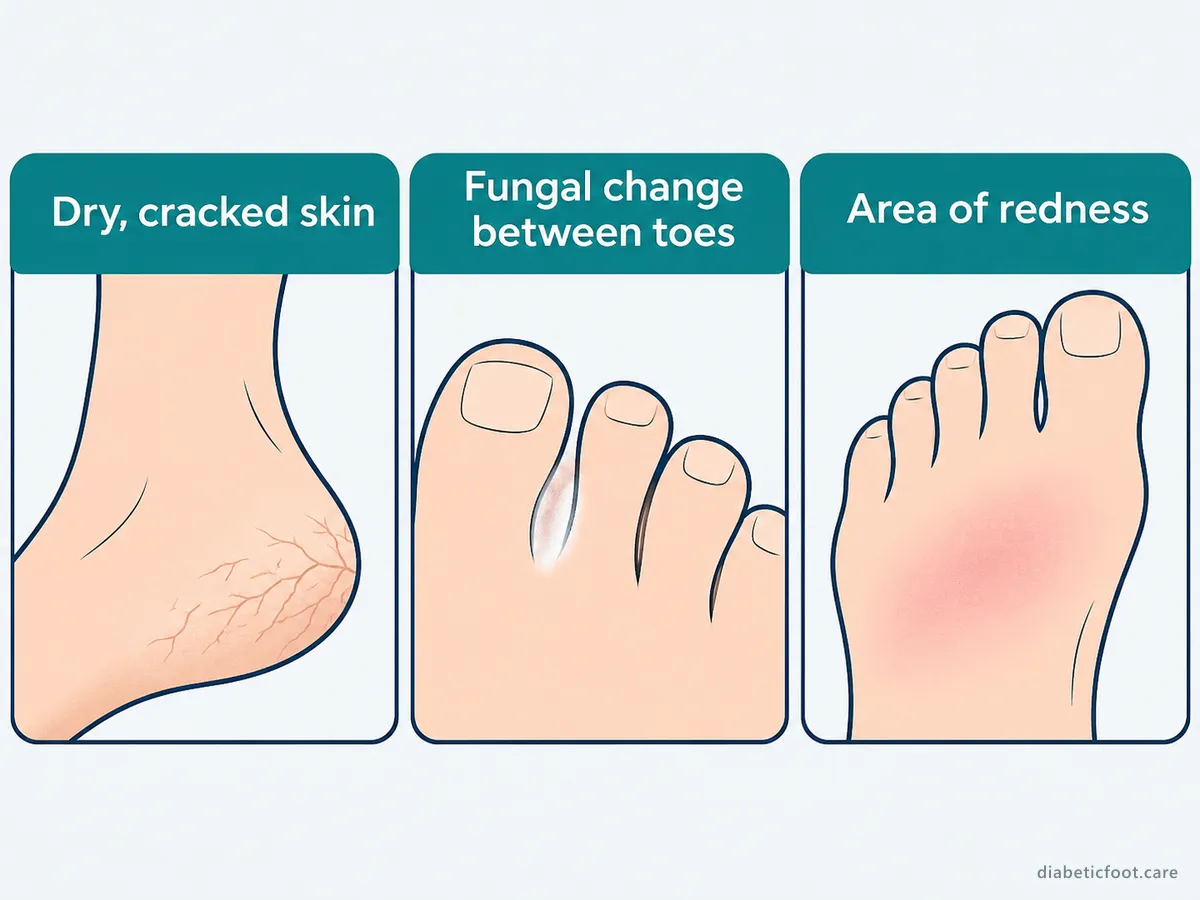
| Itchy, white, peeling or cracked skin between the toes | Athlete's foot (fungal infection) | Pharmacist treatment; tell your GP you have diabetes |
| Thick, discoloured, crumbly toenail | Fungal nail infection | See your GP |
| Itchy, dry or cracked skin where a product or material touched | Contact dermatitis | Avoid the trigger; pharmacist or GP |
| Red mark over a bony area or where a shoe rubs | Pressure or rubbing | Remove the cause; same day if the skin breaks |
| Bruise you do not remember getting | Injury you did not feel | Check daily; same day if swollen, warm or broken |
| Red, hot, swollen or spreading area | Cellulitis, deeper infection or Charcot foot | Same-day advice |
| Toe turning dark red, purple or black | Poor blood supply or gangrene | Call 999 or go to A&E |
Sources: NHS, Diabetes UK, British Association of Dermatologists and DermNet.4578911
Diabetic dermopathy (shin spots)
Diabetic dermopathy causes light brown or reddish, round or oval patches. They start slightly scaly, then flatten and become dented. They are most common on the shins, and sometimes on the side of the foot.7
These spots have been found in up to 30% of people with diabetes, more often in those with eye, nerve or kidney complications. They are harmless, usually need no treatment and tend to fade over a few years.7
Necrobiosis lipoidica
Necrobiosis lipoidica is an uncommon inflammatory skin condition. It usually starts as small, red, slightly raised patches on the shins. These slowly become shiny, with a yellowish centre and a red border. It is three times more common in women and can also happen in people without diabetes.8
The affected skin is thin. Painful ulcers can follow minor knocks and heal slowly. A dermatologist (skin specialist) will guide treatment.8 If a patch breaks open, get it checked promptly.
Fungal infections: why athlete's foot matters more with diabetes
Athlete's foot causes itchy white patches between the toes. The skin can be sore and flaky and may look red, crack or bleed. It can spread to the toenails.5
With diabetes, the worry is the cracks, because broken skin lets germs in. If you are at higher risk of cellulitis, treat athlete's foot promptly.4 If you have diabetes, see a GP about athlete's foot or a fungal nail infection.59 Dry carefully between your toes, use your own towel, wear clean socks every day and avoid walking barefoot.5
Bruises, small red dots and pressure marks
Nerve damage means you can injure your foot without noticing,3 so check an unexplained bruise daily until it fades.
Redness over a bony point or where a shoe presses means too much pressure. Like callus and bleeding into callus, it is an early step towards an ulcer, so get your footwear checked.2 For dark spots inside thick skin, see our page on calluses and diabetic foot blisters.
Ask your GP to check tiny red or purple dots that do not fade when pressed. If you also feel very unwell, treat it as an emergency. A rash that does not fade under a glass can be a sign of sepsis.6
Contact dermatitis and dry skin
Contact dermatitis is a type of eczema caused by something touching the skin, such as soaps, detergents, cosmetics or some metals. The skin becomes itchy, blistered, dry and cracked. It may look red on lighter skin and dark brown, purple or grey on darker skin.10 For ordinary dry skin, use a moisturiser (emollient), but not between your toes.2
When do red spots on diabetic feet need urgent help?
Many of the changes on this page can wait for your pharmacist, your GP or your next diabetes review, as the table above shows. Warmth, swelling, spreading redness, broken skin or a toe turning dark cannot wait: use the routes below.
For changes beyond the skin, see early and urgent foot symptoms.
Frequently asked questions
What causes a rash or red spots on diabetic feet?
On top of the foot, it could be contact dermatitis (such as a reaction to shoe materials) or pressure from tight laces or straps. Athlete's foot and skin conditions linked to diabetes can also cause red spots on diabetic feet. If the area is warm, swollen or spreading, it may be cellulitis and needs same-day advice. Otherwise, ask your pharmacist or GP to look, and mention your diabetes.
Is a bruise on my foot a sign of diabetes?
Not in itself. But with nerve damage you may not feel a knock or a rubbing shoe, so an unexplained bruise can be the only clue that your foot was injured. Check it daily. Get same-day advice from your GP practice, foot protection service or NHS 111 if it becomes swollen, warm or painful, or the skin breaks.
Are red spots on the feet an early sign of diabetes?
Usually not, as most red spots have everyday causes. But four or more shin spots (diabetic dermopathy) are almost always seen only in people with diabetes. Skin experts suggest testing anyone who has them and has not been diagnosed. If you are worried about new skin changes, see your GP.
Is athlete's foot dangerous if you have diabetes?
It is common and treatable, but the cracks it causes can let germs in and lead to cellulitis. So if you have diabetes, the NHS advises seeing a GP rather than relying only on pharmacy treatment. Keep the skin between your toes clean and dry, and get same-day advice if your foot becomes hot, red or swollen.
Can diabetic dermopathy be treated?
Treatment is not usually needed. These red spots on diabetic feet and shins may be an exaggerated reaction to minor knocks, and they often fade once blood sugar is better controlled. So protect your shins from knocks and keep your blood sugar close to target. Dermopathy is also a good reminder to keep up with your eye, kidney and foot checks.

Specialist assessment in Istanbul
Would you like a specialist opinion?
Assoc. Prof. Dr. Hüsrev Diktaş is an infectious diseases and clinical microbiology specialist in Istanbul with a clinical focus on diabetic foot infections. International patients can ask about an assessment directly.
References
- National Institute for Health and Care Excellence (NICE). Diabetic foot problems: prevention and management (NG19), Recommendations. 2015, last updated 2019. https://www.nice.org.uk/guidance/ng19/chapter/Recommendations
- International Working Group on the Diabetic Foot (IWGDF). Practical guidelines on the prevention and management of diabetes-related foot disease (IWGDF 2023 update). 2023. https://iwgdfguidelines.org/wp-content/uploads/2023/07/IWGDF-2023-01-Practical-Guidelines.pdf
- Diabetes UK. Diabetes and foot problems. 2024. https://www.diabetes.org.uk/about-diabetes/looking-after-diabetes/complications/feet
- NHS. Cellulitis. 2024. https://www.nhs.uk/conditions/cellulitis/
- NHS. Athlete's foot. 2024. https://www.nhs.uk/conditions/athletes-foot/
- Diabetes UK. Serious foot problems and diabetes. 2024. https://www.diabetes.org.uk/about-diabetes/looking-after-diabetes/complications/feet/serious-foot-problem
- DermNet. Skin problems associated with diabetes mellitus. 2019. https://dermnetnz.org/topics/skin-problems-associated-with-diabetes-mellitus
- British Association of Dermatologists. Necrobiosis lipoidica: patient information leaflet. 2019. https://www.bad.org.uk/pils/necrobiosis-lipoidica/
- NHS. Fungal nail infection. 2024. https://www.nhs.uk/conditions/fungal-nail-infection/
- NHS. Contact dermatitis. 2023. https://www.nhs.uk/conditions/contact-dermatitis/
- NHS. Gangrene. 2026. https://www.nhs.uk/conditions/gangrene/
This page gives general information for people in the UK. It is not a diagnosis and does not replace advice from your own GP, diabetes team or foot protection service. Medical disclaimer · How we write our content