In short
Diabetic foot pain is most often caused by nerve damage (diabetic neuropathy). It can feel like burning, tingling or shooting pain, and is often worse at night. Poor circulation, Charcot foot, infection and common problems such as plantar fasciitis can also hurt. Numb feet carry the bigger risk, because injuries can go unnoticed. See your GP or diabetes team about new foot pain, and get help the same day for a hot, swollen foot or a new wound.
Diabetic foot pain is common, and it can have more than one cause. The most common is nerve damage from diabetes, called diabetic peripheral neuropathy. But poor blood flow, infection, Charcot foot and everyday problems such as heel strain can also make your feet hurt. This page explains how to tell them apart, how nerve damage is checked and treated in the UK, and how to look after numb feet. It is part of our wider guide to diabetic foot problems.
What causes diabetic foot pain?
Over time, high blood glucose (sugar) can damage the tiny blood vessels that feed the nerves. The nerves then stop carrying messages properly.7 In the UK, diabetes is the most common cause of peripheral neuropathy. The longest nerves are affected first, so symptoms usually start in the feet.3
Not all diabetic foot pain is nerve pain, though. Use the table as a starting point for a chat with your GP, practice nurse or podiatrist (foot specialist), not to diagnose yourself.
| What you notice | Possible cause | What to do |
|---|---|---|
| Burning, tingling, pins and needles or shooting pain, often worse at night | Painful diabetic neuropathy | Book a GP or diabetes team appointment |
| Calf, thigh or buttock pain when walking that eases after a few minutes' rest | Peripheral arterial disease (narrowed leg arteries) | See your GP |
| Pain at rest or at night, with a cold, pale or discoloured foot | More severe loss of blood supply | Same-day help |
| A red, warm, swollen foot, with or without pain | Charcot foot or infection | Same-day help |
| Heel and arch pain that is worst with your first steps in the morning | Plantar fasciitis | See your GP and mention your diabetes |
| Pain, redness or discharge around a wound or toenail | Infection | Same-day help |
Painful and painless neuropathy
Diabetic neuropathy affects people in two quite different ways. Some people get numbness, tingling, burning, stabbing or shooting pains, sometimes with poor balance or weak foot muscles.3 These feelings, including burning feet, are often worse at night.7
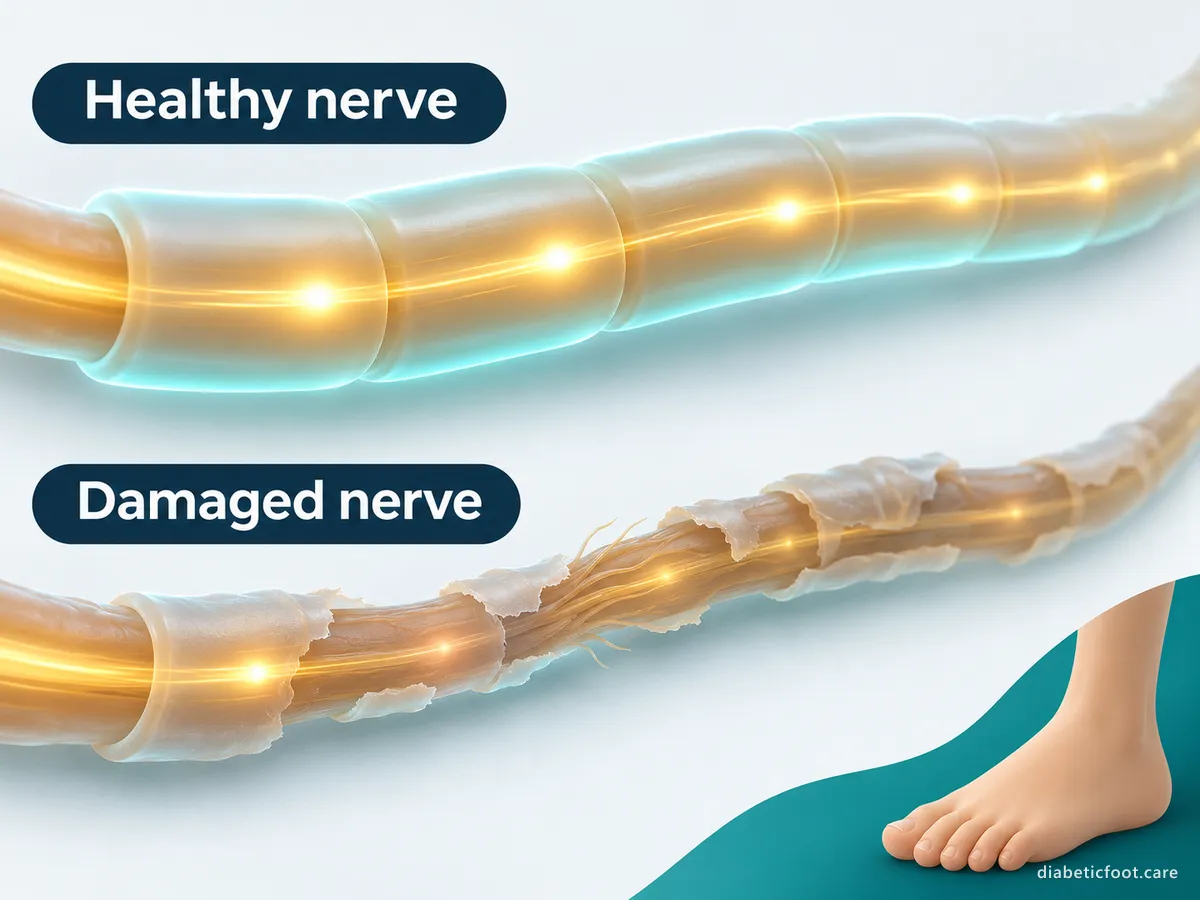
Others mainly lose feeling. This painless type can seem less of a worry, but it is the more dangerous one for your feet. If you cannot feel pain, heat or cold, a stone in your shoe, a blister or a burn can go unnoticed and turn into an ulcer or infection.7 Many people have a mix of both.
Our guide to early diabetic foot symptoms covers other changes worth reporting.
Other causes of diabetic foot pain
Reduced circulation (peripheral arterial disease)
Peripheral arterial disease (PAD) means the arteries in your legs have narrowed. It usually causes cramp-like calf pain when you walk, which settles when you rest. As it gets worse, the pain can become constant and worse at night, and the foot may feel cold.5 If you have diabetes, a severe loss of blood supply (chronic limb-threatening ischaemia) counts as an active diabetic foot problem. It should be referred to a specialist foot service within 1 working day.1
Charcot foot: when a numb foot swells
Charcot foot is an inflammation of the bones and joints in a foot with nerve damage. The foot becomes hot, swollen and red, but it may hurt only a little or not at all.1 Infection can look similar, and nerve damage can dull that pain too.10 Our page on Charcot foot and diabetes explains more.
Morning heel pain and plantar fasciitis
If your foot hurts most when you first get out of bed, diabetes is often not the cause. Heel and arch pain that is worst with your first steps after rest, then eases, is typical of plantar fasciitis. This is a strain of the tissue linking your heel bone to your toes.6 Even so, the NHS advises people with diabetes and foot pain to see a GP.6
How nerve damage in the feet is assessed
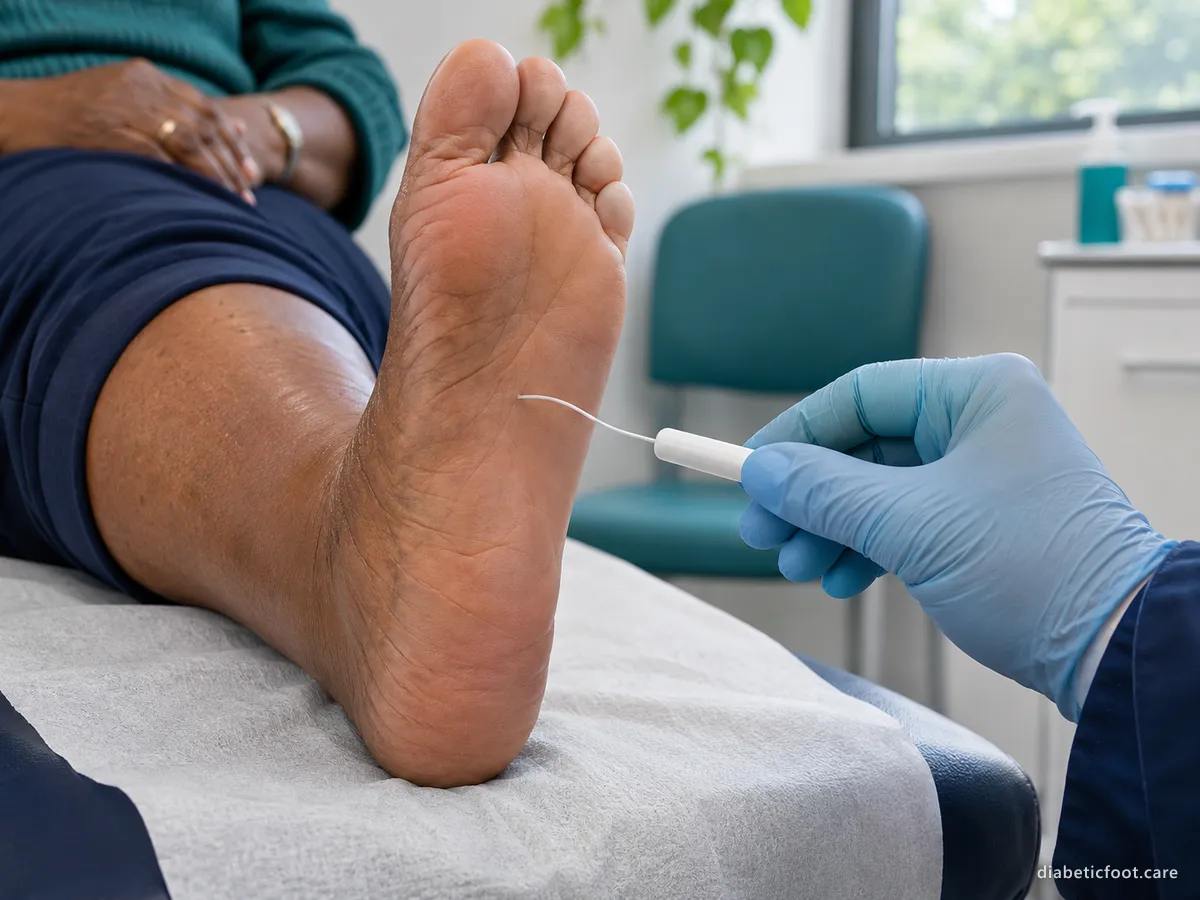
Checking for nerve damage is part of every routine diabetes foot check. NICE, which sets guidance for the NHS, recommends a 10 g monofilament test.1 This is a thin nylon thread pressed gently against your skin until it bends. Many teams also test whether you can feel vibration, using a tuning fork. They will ask about pain, cramp when walking and any changes you have noticed.8
Your GP may also arrange tests for other causes of neuropathy.3 Find out what else is checked at your annual diabetic foot check.
How painful diabetic neuropathy is managed
Treatment aims to ease the symptoms and stop the damage getting worse. Keeping blood glucose close to target, stopping smoking and cutting down on alcohol may help, or at least stop it getting worse.4 Keeping blood pressure and cholesterol in range also helps protect the nerves.7
Everyday painkillers often do not work for nerve pain, so doctors use medicines made for nerve pain.4 Only a small group is recommended, including some first developed for depression or epilepsy, and a capsaicin (chilli-based) cream for pain in one area.2 Your doctor will advise which suits you and check for side effects such as drowsiness.24
Your care should also include:2
- a plan that takes account of your sleep, daily life and mood
- treatments without medicines, such as physical and talking therapies
- referral to a specialist pain service if the pain is severe or stops you doing everyday things
Protecting feet that have lost feeling
Nerve damage does not always cause diabetic foot pain. If it has reduced the feeling in your feet instead, your eyes have to do the job your nerves used to do:
- Check your feet every day, using a mirror or a family member's help, and get advice quickly about any new mark or break in the skin.911
- Do not walk barefoot, in socks without shoes or in thin-soled slippers, indoors or outdoors.9
- Check inside your shoes before putting them on, and test the bath water with your wrist or elbow.11
- Keep hot water bottles away from your feet.12
- Go to every foot review. Nerve damage on its own puts you at moderate risk and means referral to a foot protection service.1
Frequently asked questions
Why does my diabetic foot pain get worse at night?
Nerve pain from diabetes often feels worse in the evening. Diabetes UK says cooler temperatures, the stress of the day and fewer distractions may all play a part.7 Night pain with a cold, pale foot is different. It may point to poor circulation, so get it checked promptly. If pain keeps you awake, ask about treatment: your plan should consider sleep.2
Is foot pain in the morning a sign of diabetes?
Not usually on its own. Heel and arch pain that is worst with your first steps after getting up, then eases, is typical of plantar fasciitis. It is common in people with and without diabetes.6 Diabetic foot pain from nerve damage tends to burn or tingle instead. Foot problems can be more serious when you have diabetes, so the NHS still advises seeing a GP.6
Can diabetic nerve damage in the feet be reversed?
Sometimes nerve damage improves if the cause is treated. But often it is permanent or slowly gets worse, and treatment mainly eases the symptoms.7 Keeping blood glucose, blood pressure and cholesterol close to target, and not smoking, helps stop further damage.47 Even if feeling does not return, daily checks and regular podiatry help protect your feet.
Why do my feet and legs hurt when I walk?
The classic sign of peripheral arterial disease is cramp-like pain in the calves, thighs or buttocks. It comes on when you walk and eases after a few minutes' rest.5 Your GP needs to check it. Pain that is there even at rest, especially at night, suggests more severe narrowing and should be checked the same day.15
Should I worry if my feet are numb but not painful?
Yes. Numb feet can carry more risk than diabetic foot pain, because you may not notice a blister, cut or burn, and a missed injury can turn into an ulcer or infection.7 Tell your GP or diabetes team. Make sure your feet are tested at your annual diabetes review, and check them yourself every day.111

Specialist assessment in Istanbul
Would you like a specialist opinion?
Assoc. Prof. Dr. Hüsrev Diktaş is an infectious diseases and clinical microbiology specialist in Istanbul with a clinical focus on diabetic foot infections. International patients can ask about an assessment directly.
References
- National Institute for Health and Care Excellence (NICE). Diabetic foot problems: prevention and management (NG19), recommendations. 2015, updated 2023. https://www.nice.org.uk/guidance/ng19/chapter/Recommendations
- National Institute for Health and Care Excellence (NICE). Neuropathic pain in adults: pharmacological management in non-specialist settings (CG173), recommendations. 2013, updated 2020. https://www.nice.org.uk/guidance/cg173/chapter/Recommendations
- NHS. Peripheral neuropathy. 2022. https://www.nhs.uk/conditions/peripheral-neuropathy/
- NHS. Peripheral neuropathy: treatment. 2022. https://www.nhs.uk/conditions/peripheral-neuropathy/treatment/
- NHS. Peripheral arterial disease (PAD). 2026. https://www.nhs.uk/conditions/peripheral-arterial-disease-pad/
- NHS. Plantar fasciitis. 2025. https://www.nhs.uk/conditions/plantar-fasciitis/
- Diabetes UK. Diabetic neuropathy (nerve damage). 2024. https://www.diabetes.org.uk/about-diabetes/looking-after-diabetes/complications/nerves-neuropathy
- Diabetes UK. Your annual diabetes foot check. 2024. https://www.diabetes.org.uk/about-diabetes/looking-after-diabetes/complications/feet/what-can-i-expect-at-my-annual-foot-check
- International Working Group on the Diabetic Foot (IWGDF). Guidelines on the prevention of foot ulcers in persons with diabetes (IWGDF 2023 update). 2023. https://iwgdfguidelines.org/wp-content/uploads/2023/07/IWGDF-2023-02-Prevention-Guideline.pdf
- Diabetes UK. Serious foot problems and diabetes. 2024. https://www.diabetes.org.uk/about-diabetes/looking-after-diabetes/complications/feet/serious-foot-problem
- Diabetes UK. How to look after your feet. 2024. https://www.diabetes.org.uk/about-diabetes/looking-after-diabetes/complications/feet/taking-care-of-your-feet
- Care of Burns in Scotland (COBIS), NHS National Services Scotland. Help prevent hot water bottle scalds and burns this winter. 2023. https://www.nn.nhs.scot/cobis/?p=2936
This page gives general information for people in the UK. It is not a diagnosis and does not replace advice from your own GP, diabetes team or foot protection service. Medical disclaimer · How we write our content