In short
Early diabetic foot symptoms include numbness, tingling or burning, cold feet, calf cramp on walking, dry or cracked skin, thick callus and changes in foot shape. Urgent signs include a new wound or blister, a red, hot or swollen foot, pus, a bad smell or feeling unwell. Because nerve damage can hide pain, check your feet daily and get same-day advice for any urgent sign.
Diabetic foot symptoms are often quiet at first. Nerve damage can take away the pain that would warn you, so early changes are usually seen rather than felt. This page, part of our diabetic foot guide, groups the signs by cause and shows which can wait for a routine appointment and which need help the same day.
Why early diabetic foot symptoms are easy to miss
You can have nerve damage, poor circulation, early skin damage or even an ulcer without noticing anything. Having no symptoms does not mean your feet are fine.2
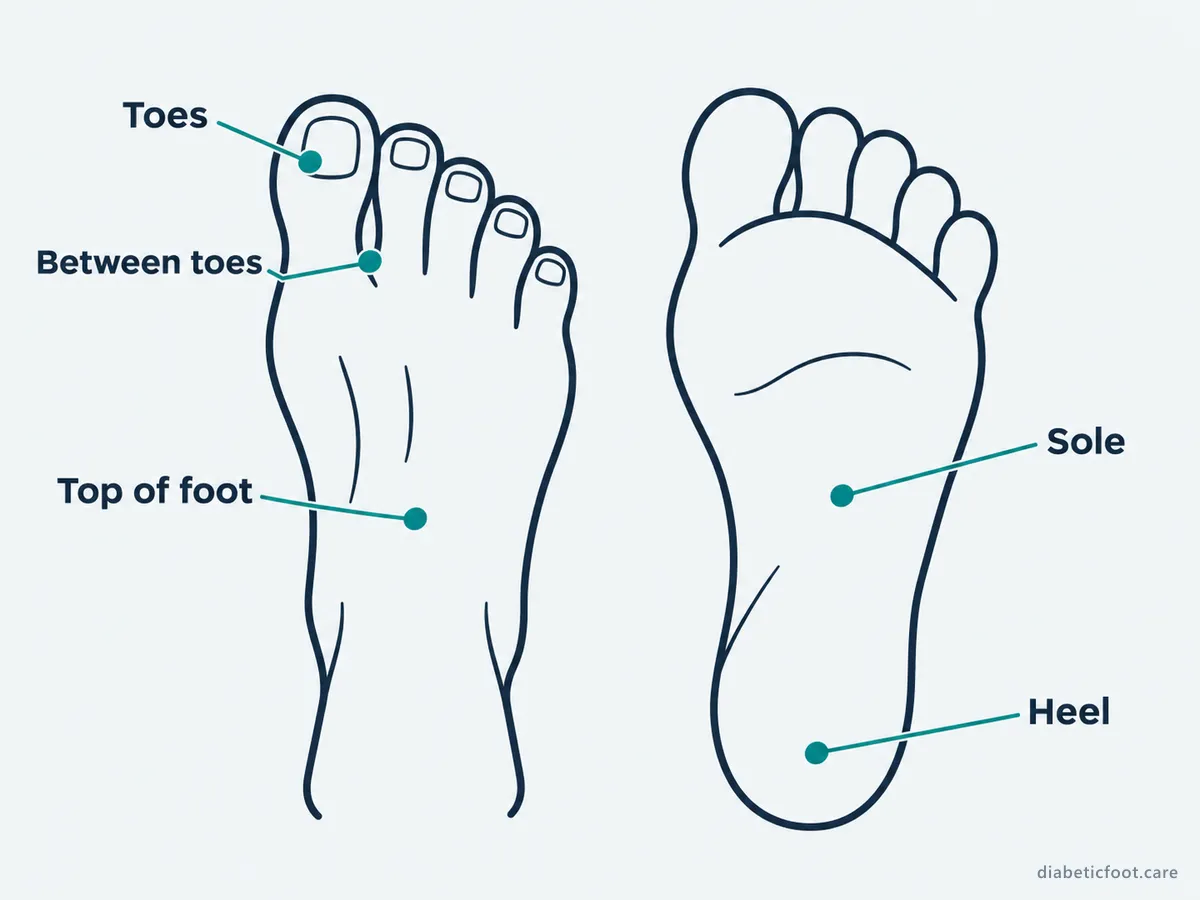
So look at your feet every day. If you cannot see your soles, use a mirror while sitting or lying down, or ask someone to check for you.4 Look at your toes and between them, the sole, the heel and the top of each foot.
Nerve symptoms: numbness, tingling and burning
Peripheral neuropathy (damage to the nerves in the feet and hands) is the most common reason feet are at risk in diabetes. It can cause:5
- pins and needles or tingling
- numbness, and finding it harder to feel pain or hot and cold
- burning or sharp pain, usually in the feet
- pain from something that should not hurt, such as a light touch
- poor balance, because it is harder to sense where your feet are
Your feet may also stop sweating.3 The biggest risk is losing protective feeling: you may not feel a stone in your shoe, a rubbing seam or a burn. Our page on diabetic nerve pain and numbness covers this in depth.
Circulation symptoms: cold feet, colour change and slow healing
Peripheral arterial disease (PAD) means narrowed arteries carry less blood to your legs and feet. The main symptom is pain in your calves when you walk, which eases after a few minutes' rest. Doctors call this intermittent claudication. Other signs include cold feet, shiny skin, a blue or purple tinge (harder to see on brown or black skin), hair loss on the legs, slow-growing toenails and sores that do not heal.6
Some people with PAD have no symptoms.6 That is one reason your foot pulses are checked at your annual diabetic foot check.2 Leg or foot pain at rest that is worse at night can mean your circulation has got worse, so get it checked promptly.6
Skin and nail changes
Skin changes are often the first diabetic foot symptoms you can see. Shiny, smooth skin and hair loss on the legs and feet are warning signs.3 Also look out for:
- dry, flaky skin or cracks, especially around the heel
- thick, hard skin (callus) over pressure points
- itchy, white or peeling skin between the toes, which can be a fungal infection
- thickened, discoloured or ingrown toenails
- a new red, dark or bruised area
At a foot check, a professional looks for bleeding into callus and splits (fissures) in the skin. These are signs that an ulcer may be about to form.2 For more detail, see our pages on red spots on diabetic feet and other skin changes and on diabetic foot blisters and calluses.
Changes in foot shape and swelling
Nerve damage in diabetes can lead to toe problems such as claw toes, hammer toes, corns and bunions.3 Any new change in shape matters, because it creates new pressure points.
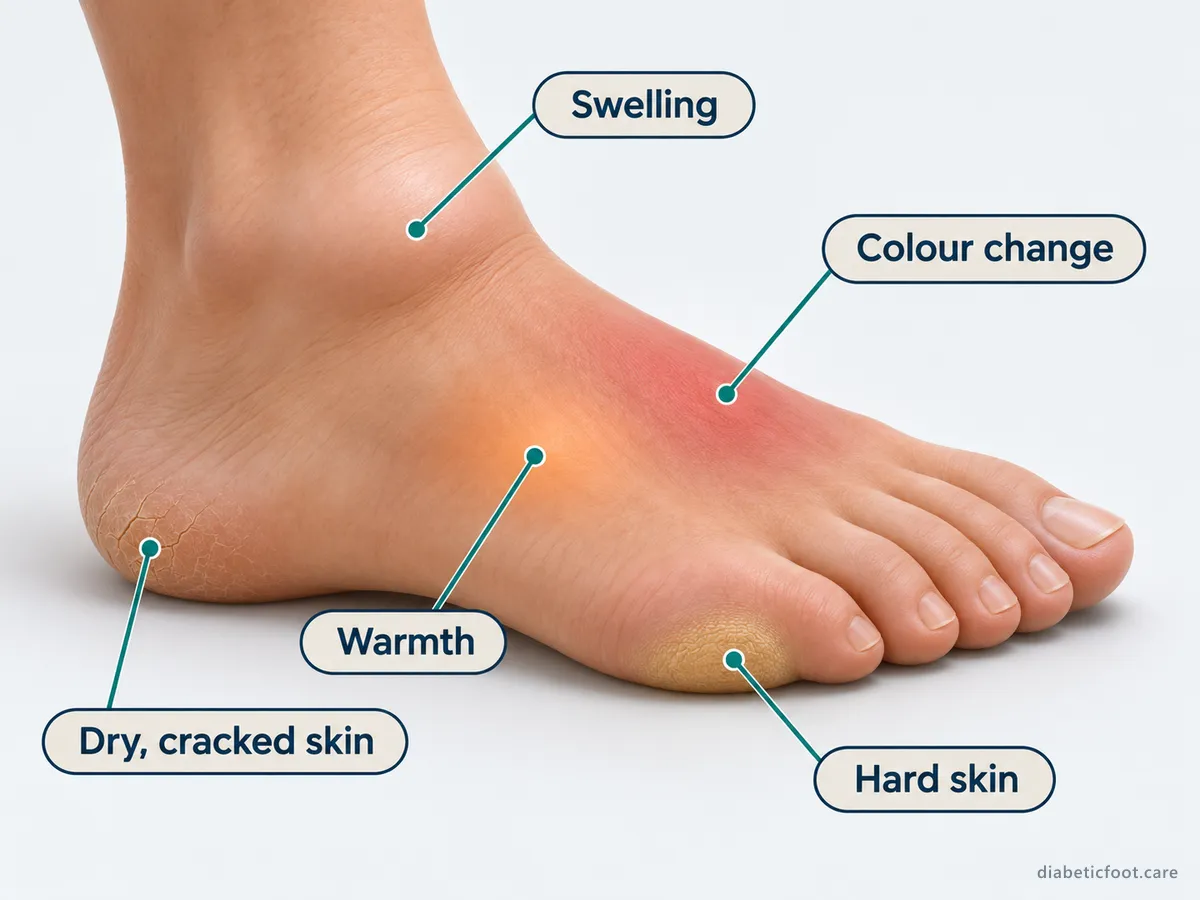
A swollen foot may make your shoes harder to put on.3 If it is also red and warm, your doctor should check for Charcot foot, especially if the skin is not broken, and even if it does not hurt.1 Read more about Charcot foot in diabetes.
Signs of infection
NICE, which sets guidance for the NHS, describes a diabetic foot infection as at least two of these: swelling or hardness, redness, tenderness or pain, warmth, or pus.1 You might also notice a bad smell, or fluid or blood on your sock.7
These signs may be milder than you expect. With a mild or moderate infection, you often do not get a fever or feel unwell.2 Our guide to diabetic foot infection explains how it is checked.
Which diabetic foot symptoms are urgent?
| What you notice | What it may mean | How quickly to act |
|---|---|---|
| Tingling, numbness or burning | Nerve damage | Routine GP or practice nurse appointment |
| Calf pain on walking that eases with rest | Poor circulation (PAD) | See your GP soon |
| Dry or cracked skin, itchy skin between toes | Dry skin or fungal infection | Pharmacist or GP; tell them you have diabetes |
| Thick callus or a corn | Too much pressure | Podiatrist; do not cut it yourself |
| New blister, cut or graze, or bleeding into callus | Skin damage that could become an ulcer | Same day |
| Red, hot or swollen foot, with or without pain | Infection or Charcot foot | Same day |
| Pus, bad smell or spreading redness | Infection | Same day; 999 if you feel very unwell |
| Toe or skin turning black, or a cold, pale, painful foot | Severe loss of blood supply or gangrene | 999 or A&E |
Sources: NICE NG19, Diabetes UK and NHS.178
What to do and who to see in the UK
For early or long-standing diabetic foot symptoms, start with your GP practice or practice nurse. If you are at moderate or high risk, you will be seen by a foot protection service, led by a specialist podiatrist. Active foot problems should be referred to a specialist foot team within 1 working day, and problems that threaten your leg or life straight away.1
While you wait, rest with your weight off the foot.7 Our page on what counts as a diabetic foot emergency has more detail. This website cannot assess symptoms, so always contact local services first.
Frequently asked questions
What are the first signs of diabetes affecting your feet?
Early diabetic foot symptoms are often tingling, pins and needles, numbness or burning in your toes and soles. You may also notice dry skin, cracked heels or thicker hard skin. Some people first notice cold feet or small cuts that heal slowly. As these changes can be slow and painless, a daily look at your feet and your annual foot check are the surest ways to spot them.
Can diabetes make your feet swell?
Yes. Swollen feet can be a sign of a foot problem linked to diabetes, although swelling has several possible causes. If your foot is swollen and also red or warm, get same-day advice, because infection and Charcot foot both need checking promptly. If only one foot is swollen, or the swelling came on suddenly, do not wait for a routine appointment.
Should I be able to feel a pulse in my foot?
Checking foot pulses is a job for a health professional, who checks them at your foot review. Missing pulses can point to reduced blood flow and may lead to more tests. Checking your own pulses is not a reliable substitute. If you have calf pain on walking, cold feet or slow-healing sores, ask your GP or podiatrist to check your circulation.
Do diabetic foot symptoms always cause pain?
No. Nerve damage can take away the feeling of pain, so an ulcer, blister, infection or even Charcot foot can develop without hurting. Take painless changes seriously, such as redness, swelling, warmth, a new mark on your sock or a change in foot shape. Do not wait for pain before getting advice.
How often should I check my feet if I have diabetes?
Check both feet every day, ideally before you put your socks on and again before bed, so you spot any diabetic foot symptoms early. Look at the tops, soles and heels and between your toes, and notice any area that feels hotter or colder than usual. If your eyesight or mobility makes this hard, use a mirror or ask a family member or carer to help, and tell your diabetes team.

Specialist assessment in Istanbul
Would you like a specialist opinion?
Assoc. Prof. Dr. Hüsrev Diktaş is an infectious diseases and clinical microbiology specialist in Istanbul with a clinical focus on diabetic foot infections. International patients can ask about an assessment directly.
References
- National Institute for Health and Care Excellence (NICE). Diabetic foot problems: prevention and management (NG19), Recommendations. 2015, last updated 2019. https://www.nice.org.uk/guidance/ng19/chapter/Recommendations
- International Working Group on the Diabetic Foot (IWGDF). Practical guidelines on the prevention and management of diabetes-related foot disease (IWGDF 2023 update). 2023. https://iwgdfguidelines.org/wp-content/uploads/2023/07/IWGDF-2023-01-Practical-Guidelines.pdf
- Diabetes UK. Diabetes and foot problems. 2024. https://www.diabetes.org.uk/about-diabetes/looking-after-diabetes/complications/feet
- Diabetes UK. How to look after your feet. 2024. https://www.diabetes.org.uk/about-diabetes/looking-after-diabetes/complications/feet/taking-care-of-your-feet
- NHS. Symptoms of peripheral neuropathy. 2022. https://www.nhs.uk/conditions/peripheral-neuropathy/symptoms/
- NHS. Peripheral arterial disease (PAD). 2026. https://www.nhs.uk/conditions/peripheral-arterial-disease-pad/
- Diabetes UK. Serious foot problems and diabetes. 2024. https://www.diabetes.org.uk/about-diabetes/looking-after-diabetes/complications/feet/serious-foot-problem
- NHS. Sepsis. 2026. https://www.nhs.uk/conditions/sepsis/
This page gives general information for people in the UK. It is not a diagnosis and does not replace advice from your own GP, diabetes team or foot protection service. Medical disclaimer · How we write our content