In short
Diabetic foot gangrene is the death of tissue in the foot, caused by a poor blood supply, infection or injury. Dry gangrene is dark, dry tissue without infection. Wet gangrene is infected tissue and is an emergency: call 999 or go to A&E. In the UK, foot ulcers come before more than 80% of diabetes-related amputations, so treating ulcers and infection early, with prompt team care, is the main way to protect the limb.
Diabetic foot gangrene means an area of tissue in your foot has died. This is most often because its blood supply is blocked, because of infection, or both.12 It is serious, but understanding it can help you act quickly and make sense of any treatment you are offered. This article is part of our diabetic foot infection guide. It explains gangrene, why amputations happen and how care teams work to save limbs.

What is diabetic foot gangrene?
Gangrene happens when body tissue dies because it is not getting enough blood, because of infection or because of an injury.1 Dead tissue is also called necrosis. In the foot, gangrene most often affects the toes, the heel or the edges of an ulcer.
The NHS lists these symptoms2:
- skin turning dark red, purple or black, which can be harder to see on brown or black skin
- nearby skin that feels numb or cold, sometimes with swelling
- pain that builds slowly, or comes on suddenly and is severe
- blisters or sores that leak foul-smelling pus or blood
Long-term high blood glucose, peripheral arterial disease (narrowed leg arteries) and a weakened immune system all raise your risk.2
Dry or wet diabetic foot gangrene: what is the difference?
| Dry gangrene | Wet gangrene | |
|---|---|---|
| What it looks like | Dry, dark or black tissue | Swollen, discoloured tissue, often with blisters, discharge and a bad smell |
| Main cause | Poor blood supply without infection | Dead tissue that has become infected |
| Surrounding skin | Often little inflammation | Spreading redness (cellulitis) |
| Urgency | Urgent: the NHS advises 999 or A&E for suspected gangrene | Emergency: call 999 or go to A&E now |
These descriptions follow IWGDF definitions and NHS advice.12 In wet gangrene the dead tissue is infected and starts to decay (putrefaction), so it can spread and make you seriously ill.
How poor blood flow and infection lead to tissue death
Most foot ulcers in diabetes are caused by nerve damage, poor blood flow (ischaemia) or both.3 Up to half of people with a foot ulcer have peripheral artery disease. It is an important risk factor for slow healing, gangrene and amputation.3 Without enough blood, tissue cannot heal or fight infection.
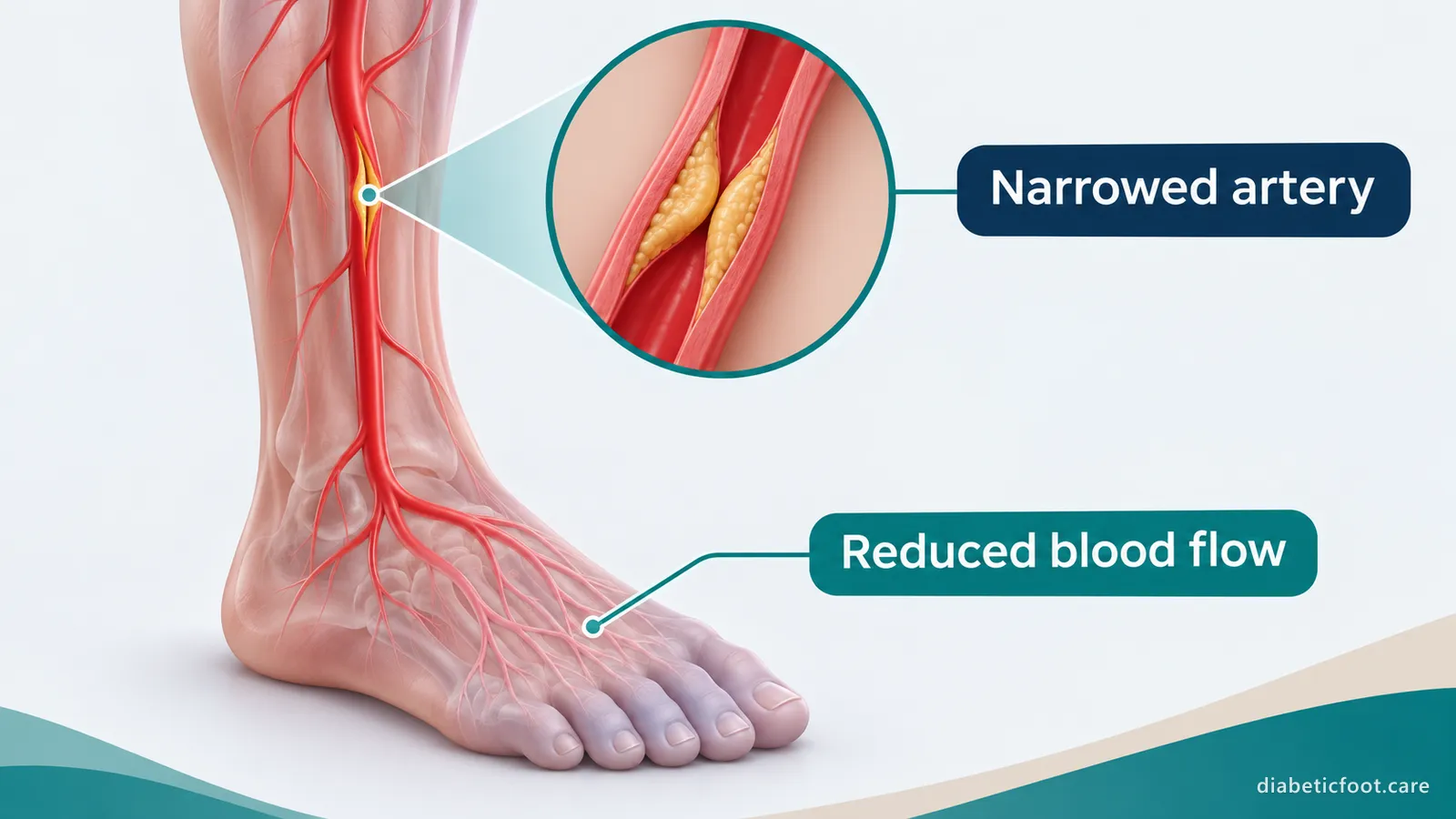
Infection makes things worse. Infection and artery disease together are linked with a much higher risk of poor healing and amputation.4 Infection can also cause fast, destructive (necrotising) damage to the soft tissues, which needs urgent surgery.4
Why does diabetes lead to foot amputations?
NICE, which sets guidance for the NHS, notes that diabetes is the most common cause of amputations that are not caused by an injury. It also notes that diabetic foot ulcers come before more than 80% of amputations in people with diabetes.5 In the UK, more than 7,000 diabetes-related amputations are reported each year.5 Foot infections are the most common event leading directly to a lower-limb amputation.4
The hopeful message is that most amputations start with a problem that can be spotted and treated: an ulcer. Getting ulcers and infections treated quickly is the main way to lower this risk.3
Limb salvage: how fast team care protects the foot
Limb salvage means using every suitable treatment to keep as much of the leg and foot as possible. NICE treats some problems as a threat to the limb or to life. These include gangrene, an ulcer with a very poor blood supply (limb ischaemia), deep infection and an ulcer with signs of sepsis. They need immediate referral to hospital emergency care and to the hospital foot team (the multidisciplinary foot care service).6
The main parts of care are:
- urgent assessment by a surgeon and a vascular (blood vessel) specialist when infection or gangrene comes with artery disease, to plan drainage and any procedure to restore blood flow (revascularisation)4
- removing dead and infected tissue quickly, with early surgery considered within 24 to 48 hours for a moderate or severe infection4
- antibiotics guided by tissue samples (cultures), together with taking pressure off the foot (offloading) and wound care, as described in our guide to diabetic foot ulcer treatment
The IWGDF reports that putting these prevention and treatment principles into practice is linked with fewer diabetes-related amputations.3
Minor and major amputation
With diabetic foot gangrene, removing tissue is sometimes the safest way to control infection or let the wound heal. The IWGDF defines two levels1:
- Minor amputation: any removal through or below the ankle, such as part of a toe, a whole toe or part of the foot.
- Major amputation: any removal above the ankle, such as a below-knee or above-knee amputation.
A minor amputation can help you keep walking and avoid a bigger operation. The NHS says amputation is considered when other treatments have not worked or are unlikely to help.2
Life after amputation and protecting the other foot
After an amputation for diabetic foot gangrene, rehabilitation usually starts the day after surgery, with physiotherapy and occupational therapy. A prosthetist (a specialist in artificial limbs) will talk to you about the options, although an artificial limb does not suit everyone.7 Phantom limb pain, and feelings such as grief or low mood, are common and can be treated. Talk to your care team about them.7
Looking after your other foot matters, especially if diabetes was the cause. The NHS advises avoiding injury to your remaining leg, wearing well-fitting footwear and seeing a podiatrist regularly.7 After a first amputation, people with diabetes are twice as likely as people without diabetes to need another.5 That is why regular foot checks matter.
Frequently asked questions
What does diabetic gangrene of the foot look like?
The skin usually turns dark red, purple or black, although colour changes can be harder to see on brown or black skin. Dry gangrene looks dry and dark. Wet gangrene looks swollen and may blister, leak pus and smell. The skin around it may feel cold or numb. Any of these signs of diabetic foot gangrene needs urgent medical help, so do not wait to see if it gets better.
Is wet gangrene an emergency?
Yes. Wet gangrene means dead tissue has become infected, and the infection can spread quickly to the rest of the body. Call 999 or go to A&E straight away, especially if you feel feverish, shivery, confused or breathless. Do not drive yourself, and take a list of your medicines with you.
Does gangrene always mean amputation?
Not always. Treatment for diabetic foot gangrene may include removing dead tissue, antibiotics for infection and surgery to restore blood flow. Amputation is considered when these treatments have not worked or are unlikely to help. When it is needed, surgeons aim to remove as little as is safely possible. Getting checked early gives your team more options.
What makes foot amputations more likely with diabetes?
Diabetes can damage the nerves and narrow the arteries in the legs. Nerve damage means injuries and ulcers can go unnoticed, and poor circulation slows healing. If an ulcer becomes infected, especially in a foot with poor blood flow, tissue may die. NICE reports that ulcers come before more than 80% of diabetes-related amputations.
How can I lower my risk of diabetic foot gangrene?
Check your feet every day and report swelling or colour changes quickly. Stop smoking, keep taking your prescribed treatments for diabetes, blood pressure and cholesterol, and go to your diabetes check-ups and foot checks. Wear well-fitting shoes and never ignore a wound. Treating ulcers and infection early is the most effective protection.
If you have signs of infection now — redness spreading, a hot swollen foot, discharge or feeling unwell — contact your GP practice, foot protection service or NHS 111 today, or call 999 if you are seriously unwell. Do not wait to contact us.

Specialist assessment in Istanbul
Would you like a specialist opinion?
Assoc. Prof. Dr. Hüsrev Diktaş is an infectious diseases and clinical microbiology specialist in Istanbul with a clinical focus on diabetic foot infections. International patients can ask about an assessment directly.
References
- International Working Group on the Diabetic Foot. Definitions and criteria for diabetes-related foot disease (IWGDF 2023 update). 2023. https://iwgdfguidelines.org/wp-content/uploads/2023/05/DMRR3654.pdf
- NHS. Gangrene. 2026. https://www.nhs.uk/conditions/gangrene/
- International Working Group on the Diabetic Foot. Practical guidelines on the prevention and management of diabetes-related foot disease (IWGDF 2023 update). 2023. https://iwgdfguidelines.org/wp-content/uploads/2023/07/IWGDF-2023-01-Practical-Guidelines.pdf
- International Working Group on the Diabetic Foot / Infectious Diseases Society of America. Guidelines on the diagnosis and treatment of foot infection in persons with diabetes (IWGDF/IDSA 2023). 2023. https://iwgdfguidelines.org/wp-content/uploads/2023/07/IWGDF-2023-04-Infection-Guideline.pdf
- National Institute for Health and Care Excellence. Diabetic foot problems: prevention and management (NG19), context. 2015, updated 2019. https://www.nice.org.uk/guidance/ng19/chapter/Context
- National Institute for Health and Care Excellence. Diabetic foot problems: prevention and management (NG19), recommendations. 2015, updated 2019. https://www.nice.org.uk/guidance/ng19/chapter/Recommendations
- NHS. Amputation. 2023. https://www.nhs.uk/conditions/amputation/
This page gives general information for people in the UK. It is not a diagnosis and does not replace advice from your own GP, diabetes team or foot protection service. Medical disclaimer · How we write our content