In short
A diabetic foot blister or callus is a warning sign that part of the foot is under too much pressure or friction, often without pain because of nerve damage. Do not burst a blister: keep it clean, cover it, take pressure off and contact your GP practice or foot team promptly. Do not cut calluses or use corn plasters; a podiatrist should remove hard skin. Redness, warmth, pus or a bad smell needs same-day advice.
A diabetic foot blister or a patch of thick callus can look minor, but in diabetes both are signs that the skin is under strain. Nerve damage may stop you feeling the rubbing or pressure, so the first clue is often something you see. This page, part of our overview of foot problems linked to diabetes, explains why blisters and calluses matter, safe first aid and when to get help.
Why a diabetic foot blister or callus is a warning sign
Foot ulcers often develop in the same way. Nerve damage, changes in foot shape and stiff joints put extra load on parts of your foot. The skin reacts by thickening into callus. This raises the pressure further and can lead to bleeding under the skin and then an open wound.2 Walking on a numb foot keeps the damage going.2
A minor problem such as a blister can quickly become infected and lead to a serious infection or ulcer.5 Callus on its own counts as low foot risk, but callus with nerve damage or poor circulation puts you at high risk.1 Our page on early stage diabetic foot ulcers explains what to watch for next.
What causes blisters on diabetic feet?
Blisters are pockets of fluid under the skin. Most are caused by rubbing, burns or a skin reaction. Blood blisters form when small blood vessels are damaged too.3 Common causes of a diabetic foot blister include:
- Rubbing from footwear: new, tight or loose shoes, seams and creased socks.
- Burns you do not feel: hot water, heaters and hot-water bottles. Wash your feet in water below 37°C, and do not use a heater or hot-water bottle to warm them.2
- Diabetic blisters (bullosis diabeticorum): rare blisters that appear without any injury on the feet, legs, hands or arms. They are not usually painful and usually heal on their own within about five weeks.4 They are more common if you have had diabetes for a long time or have nerve damage.6
Athlete's foot can also cause small fluid-filled blisters.9
Safe first aid for a blister
Follow these steps:
- Do not burst it, and do not peel off loose skin if it has burst.3
- Keep it clean: wash gently, pat dry and cover with a soft, sterile dressing or padded plaster.3
- Wash your hands before touching a burst blister, and let any fluid drain before covering it.3
- Take the pressure off: stop wearing the shoes that caused it, and rest with your foot raised when you can.35
- Tell your foot team: call your GP or foot protection team straight away about a new blister, or NHS 111 if you cannot get through.4
A health professional may protect or drain a blister if needed.2 If a diabetic blister is big enough to need draining, speak to your GP rather than doing it yourself.4
Calluses and corns: why they need professional care
A callus is a larger patch of rough, thick skin. A corn is a small, hard lump of skin, often on or between the toes. Both are caused by pressure or rubbing.7
Home advice on softening and filing hard skin does not apply if you have diabetes. The NHS says people with diabetes should not treat corns and calluses themselves, and should see a GP or foot specialist instead.7 Diabetes UK also advises:8
- do not use blades on corns or hard skin
- avoid corn plasters, creams and sprays, which can burn the skin and cause ulcers
- use a pumice stone only with care, and ask a podiatrist for help
Avoid chemical treatments or plasters on corns and calluses, and do not soak your feet.2
Can a callus hide an ulcer?
Yes. Thick callus can cover damage underneath. Bleeding into a callus, seen as a red, brown or black area, is a sign that an ulcer may be forming.2 Fluid or blood on your sock is another clue.
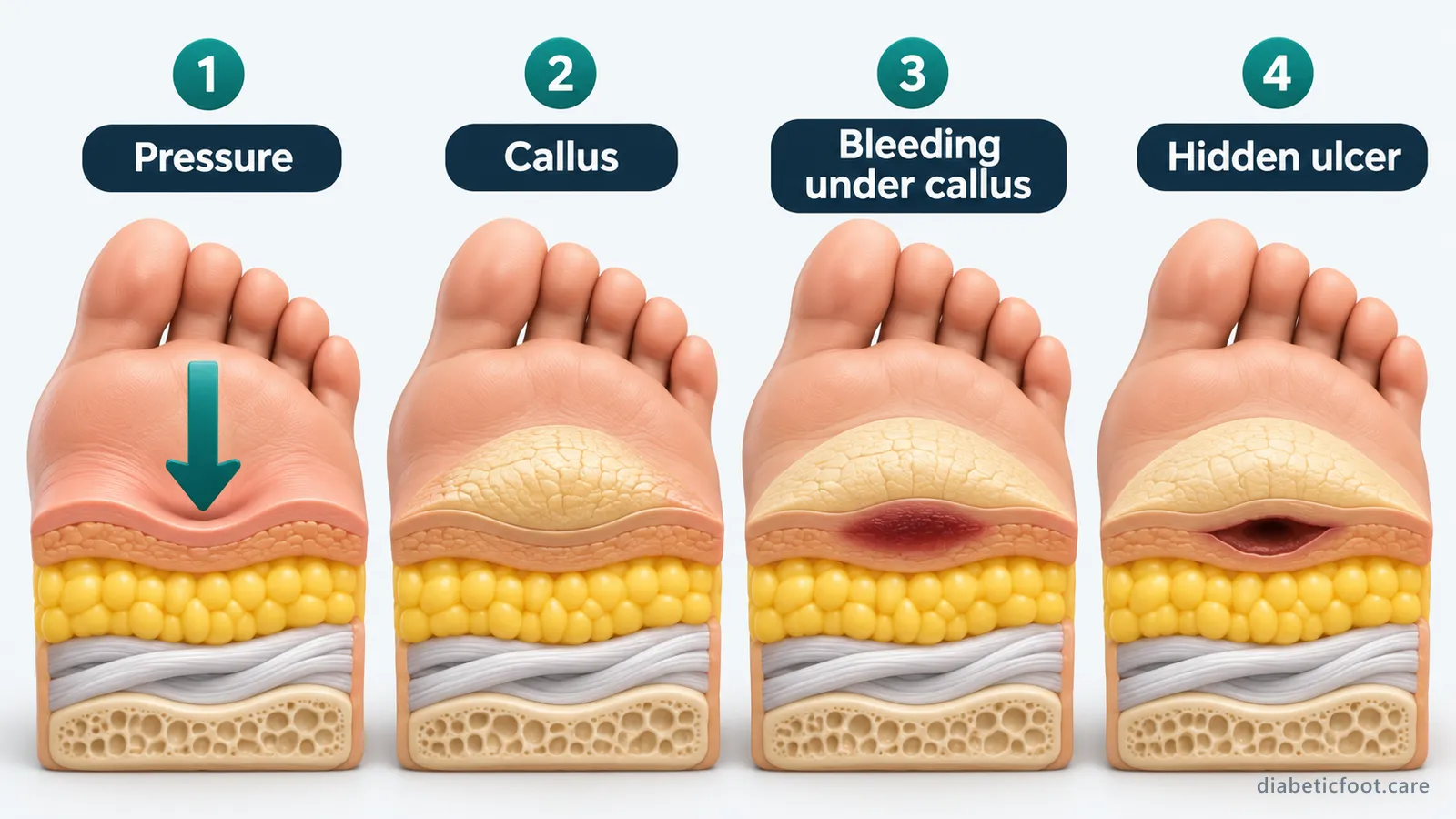
A podiatrist can remove callus with sterile instruments and check the skin underneath. This is called debridement.2 See a GP if a corn or callus bleeds or has pus or other discharge.7 To compare with other warning signs, see our guide to diabetic foot symptoms to watch for.
Footwear and pressure: stopping problems coming back
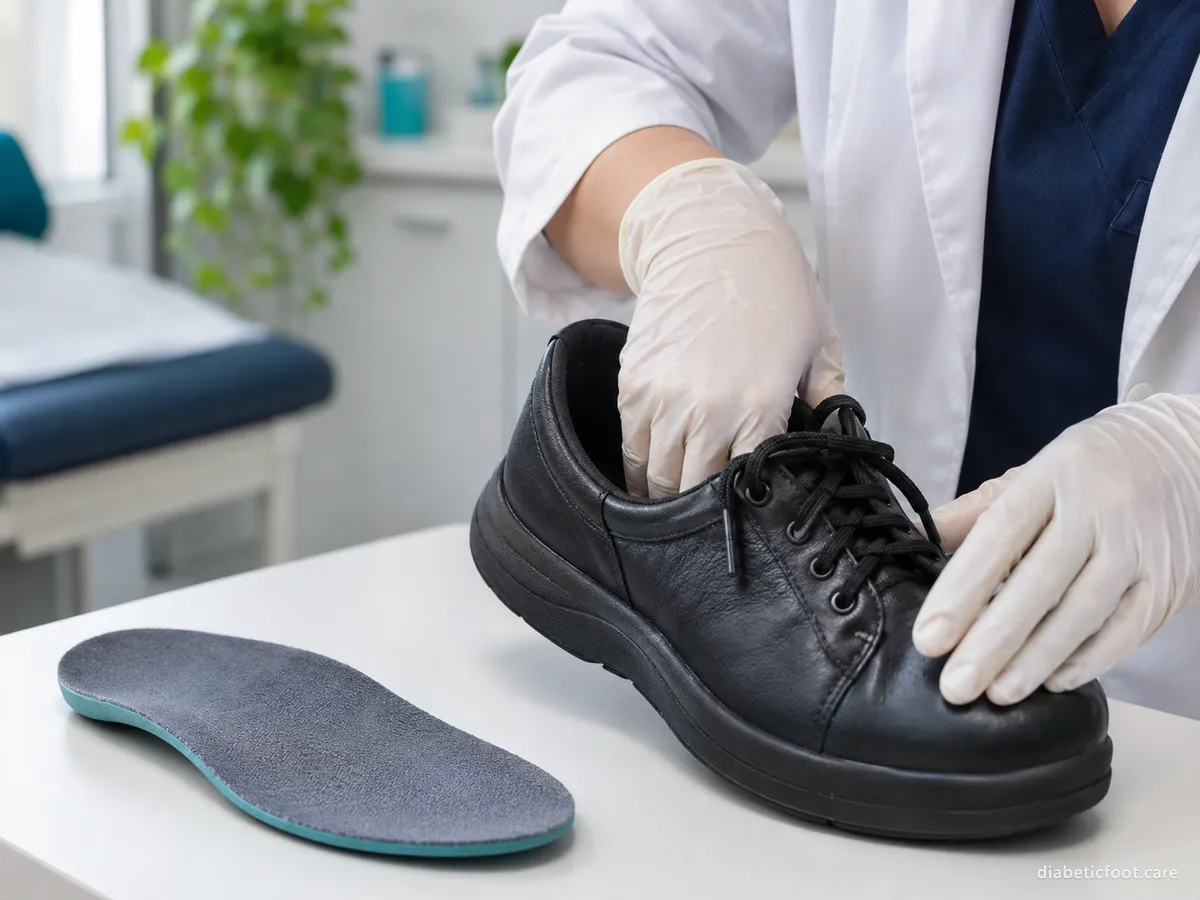
If the pressure is not dealt with, problems come back. Shoes should be 1 to 2 cm longer than your foot inside, as wide as its widest part and deep enough for your toes. Check the fit standing up, ideally later in the day. If callus or redness shows that part of your foot is taking too much load, a professional may prescribe special footwear or made-to-measure insoles.2
Wear new shoes indoors for 20 to 30 minutes at first, and check inside them before putting them on.8 In the UK, if you are at moderate or high risk you should be referred to a foot protection service, which provides skin and nail care and checks whether you need specialist footwear or orthoses (shoe inserts).1 For daily habits, see our guide to everyday diabetic foot care.
Getting help for a diabetic foot blister or callus
For a fuller list of warning signs, see our page on diabetic foot emergencies.
Frequently asked questions
Should I pop a blister on my foot if I have diabetes?
No. Do not burst a diabetic foot blister, because the unbroken skin helps protect against infection. Keep it clean, cover it with a soft sterile dressing and take pressure off the area. Contact your GP practice or foot protection team, who can drain it safely if needed. Get same-day advice if the skin around it becomes red, warm or swollen.
How long does a diabetic foot blister take to heal?
Diabetic blisters (bullosis diabeticorum) usually heal on their own within about five weeks, usually without scars. Ordinary blisters often heal within a week. Healing can be slower if you have poor circulation. Get any diabetic foot blister that is not improving, or shows signs of infection, checked by a professional.
Can I use a corn plaster if I have diabetes?
No. Diabetes UK advises people with diabetes to avoid corn plasters, creams and sprays, because they can burn the skin and cause ulcers. International foot guidelines say the same. Instead, ask your GP practice about seeing a podiatrist. They can remove hard skin safely and work out what is causing the pressure, such as your shoes or foot shape.
Who should remove a callus on my foot if I have diabetes?
A podiatrist or another trained foot care professional should remove callus. They use sterile instruments to take away the hard skin safely and check for damage underneath. Do not use blades or cut it yourself. If you are at moderate or high risk, your foot protection service can do this and check your footwear.
Why do I keep getting calluses on my feet with diabetes?
Calluses form where your foot takes repeated pressure or rubbing, for example over bony points, under the ball of the foot or on toes that have changed shape. Nerve damage can change how you walk and how your weight passes through your foot, and badly fitting shoes add to the load. A footwear and pressure review, sometimes with special insoles, helps stop them coming back.

Specialist assessment in Istanbul
Would you like a specialist opinion?
Assoc. Prof. Dr. Hüsrev Diktaş is an infectious diseases and clinical microbiology specialist in Istanbul with a clinical focus on diabetic foot infections. International patients can ask about an assessment directly.
References
- National Institute for Health and Care Excellence (NICE). Diabetic foot problems: prevention and management (NG19), Recommendations. 2015, last updated 2019. https://www.nice.org.uk/guidance/ng19/chapter/Recommendations
- International Working Group on the Diabetic Foot (IWGDF). Practical guidelines on the prevention and management of diabetes-related foot disease (IWGDF 2023 update). 2023. https://iwgdfguidelines.org/wp-content/uploads/2023/07/IWGDF-2023-01-Practical-Guidelines.pdf
- NHS. Blisters. 2023. https://www.nhs.uk/conditions/blisters/
- Diabetes UK. Diabetes and foot problems. 2024. https://www.diabetes.org.uk/about-diabetes/looking-after-diabetes/complications/feet
- Diabetes UK. Serious foot problems and diabetes. 2024. https://www.diabetes.org.uk/about-diabetes/looking-after-diabetes/complications/feet/serious-foot-problem
- DermNet. Skin problems associated with diabetes mellitus. 2019. https://dermnetnz.org/topics/skin-problems-associated-with-diabetes-mellitus
- NHS. Corns and calluses. 2026. https://www.nhs.uk/conditions/corns-and-calluses/
- Diabetes UK. How to look after your feet. 2024. https://www.diabetes.org.uk/about-diabetes/looking-after-diabetes/complications/feet/taking-care-of-your-feet
- NHS. Athlete's foot. 2024. https://www.nhs.uk/conditions/athletes-foot/
- NHS. Sepsis. 2026. https://www.nhs.uk/conditions/sepsis/
This page gives general information for people in the UK. It is not a diagnosis and does not replace advice from your own GP, diabetes team or foot protection service. Medical disclaimer · How we write our content