In short
A diabetic foot ulcer is a break in the skin of the foot in someone with diabetes, usually linked to nerve damage, reduced blood flow or both. It often starts at a pressure point or after a small injury you did not notice. Ulcers can become infected and lead to amputation, so get any new wound checked the same day. Treatment includes taking pressure off the foot, wound care, treating infection and improving blood flow.
In this section
A diabetic foot ulcer is an open wound on the foot of someone with diabetes. The skin has broken down through at least its top layer. Most are caused by nerve damage, poor circulation or both, and they can become serious quickly if infected. Below, we explain causes, types, checks and treatment.

What is a diabetic foot ulcer?
A foot ulcer is a break in the skin of the foot. It goes through the outer layer (the epidermis) and into at least part of the layer beneath (the dermis).3 In diabetes, it usually comes with nerve damage in the feet (peripheral neuropathy), narrowed leg arteries (peripheral artery disease) or both.3
A superficial ulcer stays within the skin. A deep ulcer reaches tissue underneath, such as fascia (a tough sheet of tissue), muscle, tendon or bone.3 NICE, which sets guidance for the NHS, counts an ulcer as an 'active diabetic foot problem'. So are infection, gangrene (dead tissue) and a suspected Charcot foot.1
Some warning signs can come before an ulcer: bleeding into or under the skin, a blister, or a shallow crack that has not yet reached the deeper layer.3 Our guide to blisters, calluses and other skin warning signs explains how to deal with them safely.
Why do foot ulcers form in diabetes?
Most ulcers start when an at-risk foot meets a trigger, such as a rubbing shoe or stepping on something sharp.2 Over time, high blood sugar can damage the small blood vessels and nerves in your feet. So you may not feel an injury, and wounds may heal more slowly.5
It often happens like this2:
- Nerve damage leaves the foot numb and can sometimes change its shape.
- Numbness, a change in foot shape and stiff joints put extra pressure on parts of the sole.
- The pressure causes hard skin (callus), which adds more pressure.
- Bleeding starts under the callus, then the skin breaks down into an ulcer.
Walking on a foot you cannot feel keeps pressure on the wound and slows healing.2 Narrowed leg arteries affect up to half of people with a diabetes-related foot ulcer. They make poor healing, gangrene and amputation more likely.2
Neuropathic, ischaemic and neuroischaemic ulcers
Ulcers are grouped by their cause, because this affects treatment. Neuropathic means caused by nerve damage. Ischaemia means reduced blood supply.
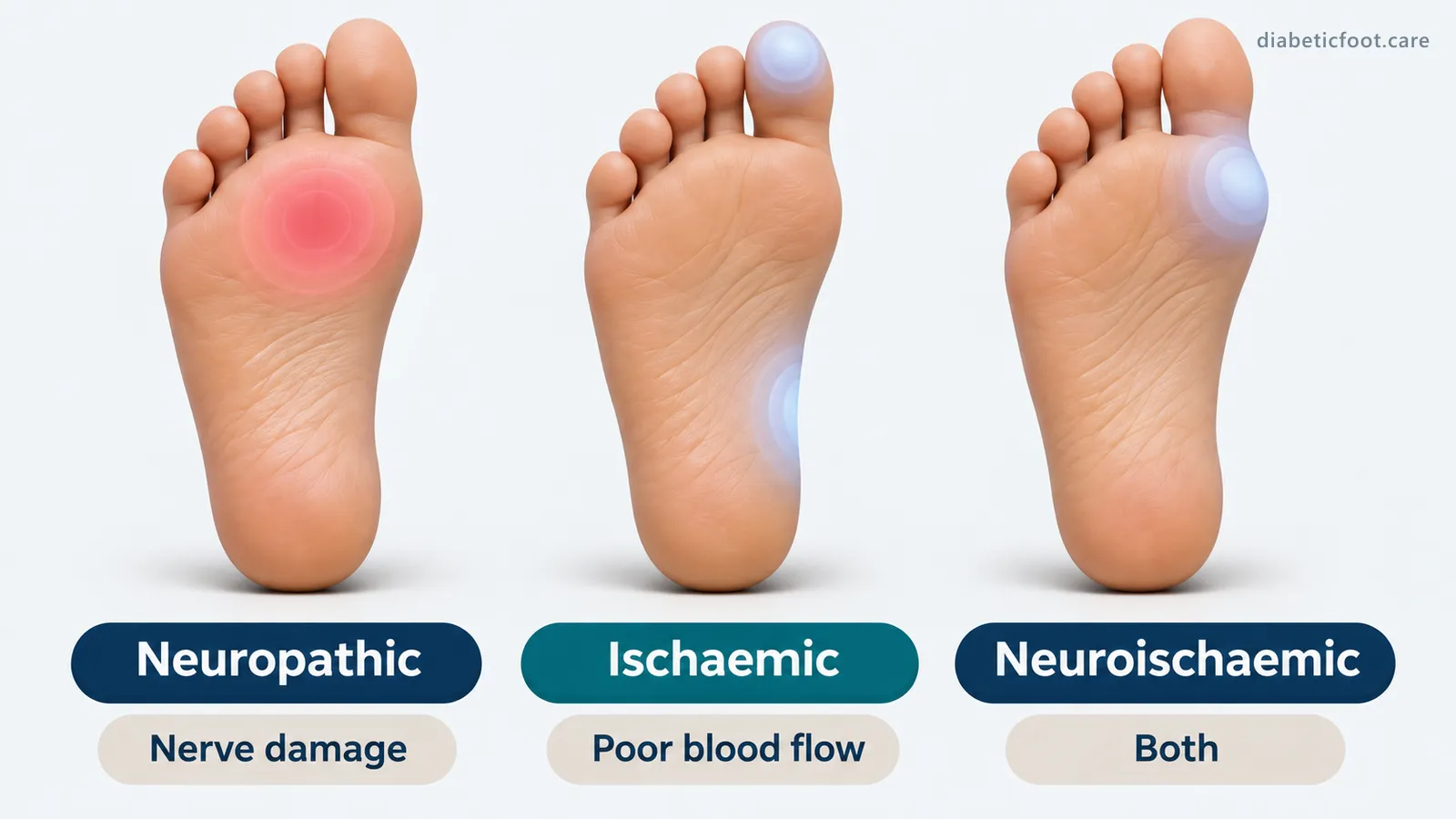
| Type | What it means | Typical features |
|---|---|---|
| Neuropathic | Loss of protective feeling, with no narrowing of the leg arteries | Often painless; tends to form where pressure is highest, often with callus |
| Neuroischaemic | Both nerve damage and reduced blood flow | With neuropathic ulcers, these make up most ulcers; may cause no symptoms even when circulation is poor |
| Ischaemic | Narrowed leg arteries without nerve damage | Uncommon; usually painful and may follow a minor injury |
These groups come from international guidance.23 A painless ulcer is not a minor ulcer. In neuroischaemic ulcers, nerve damage can hide the warning signs even when blood flow is badly reduced.2
Where on the foot do ulcers appear?
Ulcers form where your foot takes the most pressure or rubbing. Common places are the ball of the foot (over the metatarsal heads), the big toe, the tips of clawed or hammer toes, and the heel. Ulcers on the sides or top of the foot are often caused by shoes rubbing.7
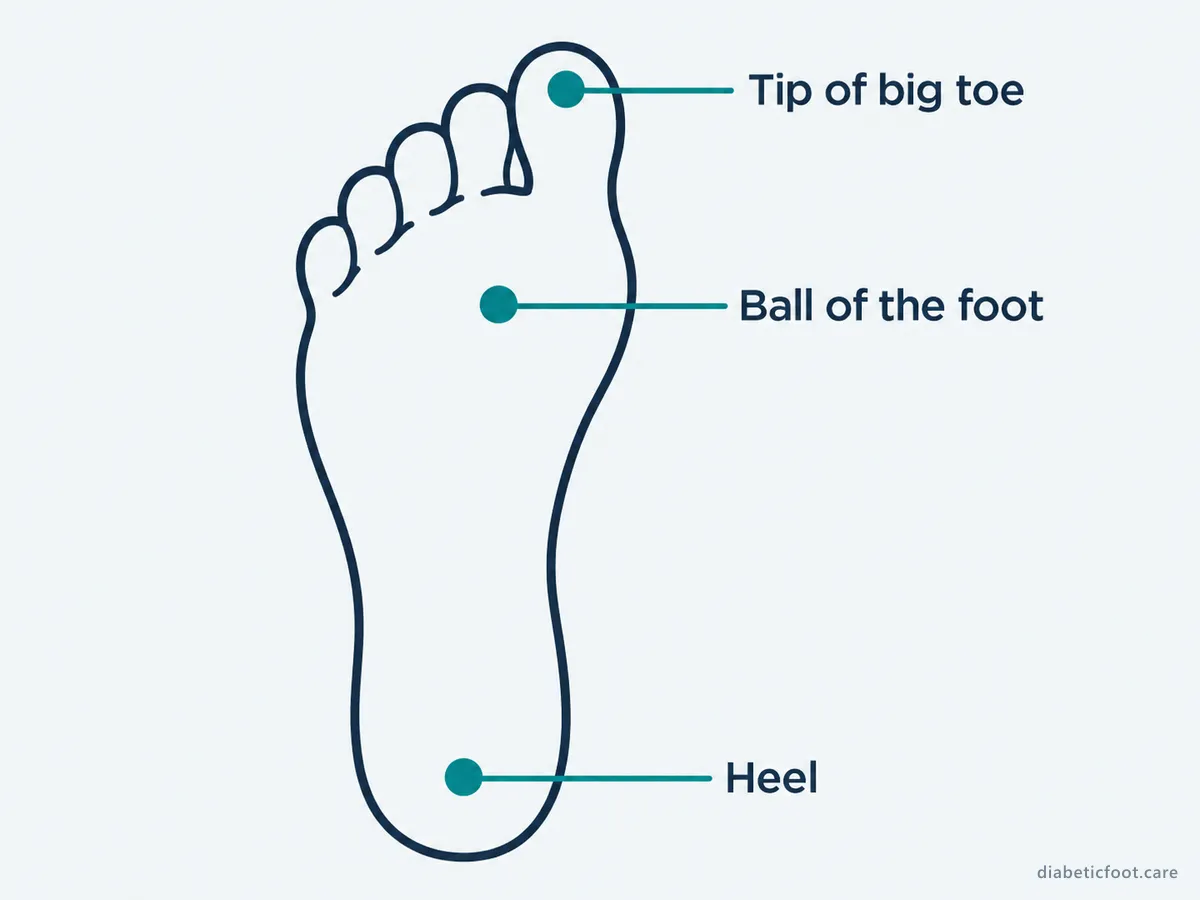
Heel ulcers are less common than ulcers at the front of the foot, but harder to take pressure off and to heal.7 Heels are especially at risk if you have to stay in bed. So people at moderate or high risk who go into hospital should have their heels protected from pressure.1
Can a diabetic foot ulcer be life-threatening?
Sometimes, yes, but quick care lowers the risk a great deal. The danger usually comes from infection spreading from the wound. Sepsis is a serious reaction to infection that can be life-threatening and needs urgent hospital treatment.6
Problems that threaten the leg or life need hospital care straight away. They include an ulcer with a fever or signs of sepsis, an ulcer with poor blood supply to the leg (limb ischaemia), a suspected deep infection, and gangrene.1
Foot ulcers and infections can sometimes lead to an operation to remove a foot or leg.8 One NHS trust leaflet also links foot ulcers in diabetes with a higher risk of heart attack, stroke, amputation and early death.9 Your doctor should also check for heart and circulation disease that has not been diagnosed yet.1
Diabetes UK says people with diabetes are up to 20 times more likely to have an amputation. Getting the right treatment early can lower the risk of an ulcer getting worse, becoming infected or leading to amputation.5
How is a foot ulcer assessed?
Your team should record the size, depth and position of every ulcer, using a standard system such as SINBAD (Site, Ischaemia, Neuropathy, Bacterial infection, Area, Depth) or the University of Texas classification.1 SINBAD is recommended for sharing information between professionals, with each item described rather than just a total score.4
The team will usually check:
- Blood supply: the pulses in your foot, blood flow sounds using a Doppler (a small ultrasound probe), and ankle or toe pressures.2
- Feeling: whether you can still feel enough to protect your foot, for example with a 10 g monofilament (a fine nylon thread).1
- Infection: at least two signs of inflammation, such as redness, warmth, swelling or tenderness, or pus. Nerve damage or poor circulation can make these signs weaker.2
- Depth and bone: whether bone can be felt with a sterile metal probe (the probe-to-bone test). Ulcers deeper than the skin need an X-ray.2
- Cause and general health: your shoes, how you walk, foot shape, kidney function, nutrition and blood sugar control.2
Read more about spotting and grading an early stage diabetic foot ulcer. If you have an ulcer, you should be referred within 1 working day to a hospital foot team (the multidisciplinary foot care service) or foot protection service. That team should then assess how urgent your ulcer is within another working day.1
How are diabetic foot ulcers treated?
Standard ulcer care has five parts1: offloading (taking pressure off the wound), treating infection, treating poor blood supply, debridement (removing dead tissue and callus) and dressings.
- Offloading: for many ulcers on the sole, the first choice is a knee-high cast or boot that cannot be taken off.7
- Treating infection: antibiotics are used when there is an infection, guided by tissue samples. They should not be given just to prevent infection.1 See how a diabetic foot infection is recognised and graded. For a complex infection, the team may arrange an infectious diseases specialist review.
- Improving blood flow: checking your circulation and, if needed, revascularisation (a procedure to open or bypass narrowed arteries).2
- Debridement and dressings: done by trained professionals, with dressings chosen to suit the wound.1
Each step is explained in our full guide to diabetic foot ulcer treatment and healing time. For care between appointments, see looking after a foot ulcer dressing at home.
Healing, remission and preventing a new ulcer
An ulcer has healed when the skin has fully closed and nothing is leaking. The foot is then 'in remission', meaning the skin is unbroken and there is no infection anywhere on the foot.3 A new ulcer in someone who has had one before is called a recurrent ulcer, wherever it appears.3
After a diabetic foot ulcer, your risk of another is at its highest, so you will need to protect your feet for life.2 In the UK, a past ulcer puts you in the high-risk group. The foot protection service should look after you, with reviews as often as every 1 to 2 months when there is no immediate concern.1 Check your feet every day and wear footwear that takes pressure off. Never wear the shoe that caused the ulcer again.2
Frequently asked questions
Are foot ulcers with diabetes always painful?
No. Many diabetic foot ulcers caused by nerve damage hurt very little or not at all, because the nerves that would send pain signals are damaged. Ulcers caused mainly by poor circulation are more often painful. No pain does not mean the ulcer is minor. Get any break in the skin checked the same day by your GP practice or foot protection service.
Who treats an ulcer on a diabetic foot in the UK?
There are two levels of care. A foot protection service is led by a podiatrist with specialist training. A hospital foot team (the multidisciplinary foot care service) handles more complex problems. It brings together diabetes doctors, podiatrists, specialist nurses, vascular and orthopaedic surgeons, microbiology, casting and wound care. Your GP practice can refer you, and an ulcer should be referred within 1 working day.
Can I keep walking on a foot ulcer?
Walking on a diabetic foot ulcer keeps pressure on the wound and slows healing, especially if you cannot feel your foot. Your team will usually give you a cast or walker boot to take the pressure off, and ask you to limit standing and walking. When you first notice a problem, rest with your foot raised and supported, then contact your GP or foot protection team straight away.
Do all foot ulcers need antibiotics?
No. Antibiotics should not be given just to stop an infection starting. They are used when infection is suspected, ideally after a tissue sample is taken, so treatment can be changed once results are back. If you notice spreading redness, warmth, swelling, pus or a new smell around an ulcer, contact your GP practice, foot protection service or NHS 111 the same day.
Can a diabetic foot ulcer come back after it heals?
Yes. After an ulcer heals, your foot has the highest risk of a new one. That is why specialists say the foot is in remission. The pressure, nerve damage or circulation problems behind the ulcer are usually still there. Regular foot protection reviews, daily foot checks, well-fitting or prescribed footwear and good diabetes control all help lower the chance of another ulcer.

Specialist assessment in Istanbul
Would you like a specialist opinion?
Assoc. Prof. Dr. Hüsrev Diktaş is an infectious diseases and clinical microbiology specialist in Istanbul with a clinical focus on diabetic foot infections. International patients can ask about an assessment directly.
References
- NICE. Diabetic foot problems: prevention and management (NG19), Recommendations. 2015, updated 2019. https://www.nice.org.uk/guidance/ng19/chapter/Recommendations
- International Working Group on the Diabetic Foot. Practical guidelines on the prevention and management of diabetes-related foot disease (IWGDF 2023 update). 2023. https://iwgdfguidelines.org/wp-content/uploads/2023/07/IWGDF-2023-01-Practical-Guidelines.pdf
- International Working Group on the Diabetic Foot. Definitions and criteria for diabetes-related foot disease (IWGDF 2023 update). 2023. https://iwgdfguidelines.org/wp-content/uploads/2023/05/DMRR3654.pdf
- International Working Group on the Diabetic Foot. Guidelines on the classification of foot ulcers in people with diabetes (IWGDF 2023 update). 2023. https://iwgdfguidelines.org/wp-content/uploads/2023/07/IWGDF-2023-03-Classification-Guideline.pdf
- Diabetes UK. Serious foot problems and diabetes. 2024. https://www.diabetes.org.uk/about-diabetes/looking-after-diabetes/complications/feet/serious-foot-problem
- NHS. Sepsis. 2026. https://www.nhs.uk/conditions/sepsis/
- International Working Group on the Diabetic Foot. Guidelines on offloading foot ulcers in persons with diabetes (IWGDF 2023 update). 2023. https://iwgdfguidelines.org/wp-content/uploads/2023/07/IWGDF-2023-06-Offloading-Guideline.pdf
- NHS. Complications of type 2 diabetes. 2025. https://www.nhs.uk/conditions/type-2-diabetes/complications/
- West Suffolk NHS Foundation Trust. Looking after your diabetic foot ulcer (patient leaflet). 2020. https://www.wsh.nhs.uk/CMS-Documents/Patient-leaflets/DiabetesUnit/6567-1-Looking-after-your-diabetic-foot-ulcer.pdf
This page gives general information for people in the UK. It is not a diagnosis and does not replace advice from your own GP, diabetes team or foot protection service. Medical disclaimer · How we write our content