In short
Caring for your diabetic foot ulcer dressing at home supports the treatment your foot team gives you; it does not replace it. Follow your written dressing plan, wash your hands, keep the dressing clean and dry, keep weight off the foot and check both feet every day. Do not soak your feet or put honey, herbal or other home remedies on the ulcer. Contact your team the same day if you see signs of infection or the wound gets worse.
A diabetic foot ulcer dressing is only one part of treatment, but how you look after it between appointments makes a real difference. Always follow the plan your foot team gives you. Home care supports your treatment; it never replaces it. This page, part of our guide to diabetic foot ulcers, covers day-to-day care, the main types of dressing and the warning signs that need same-day help.
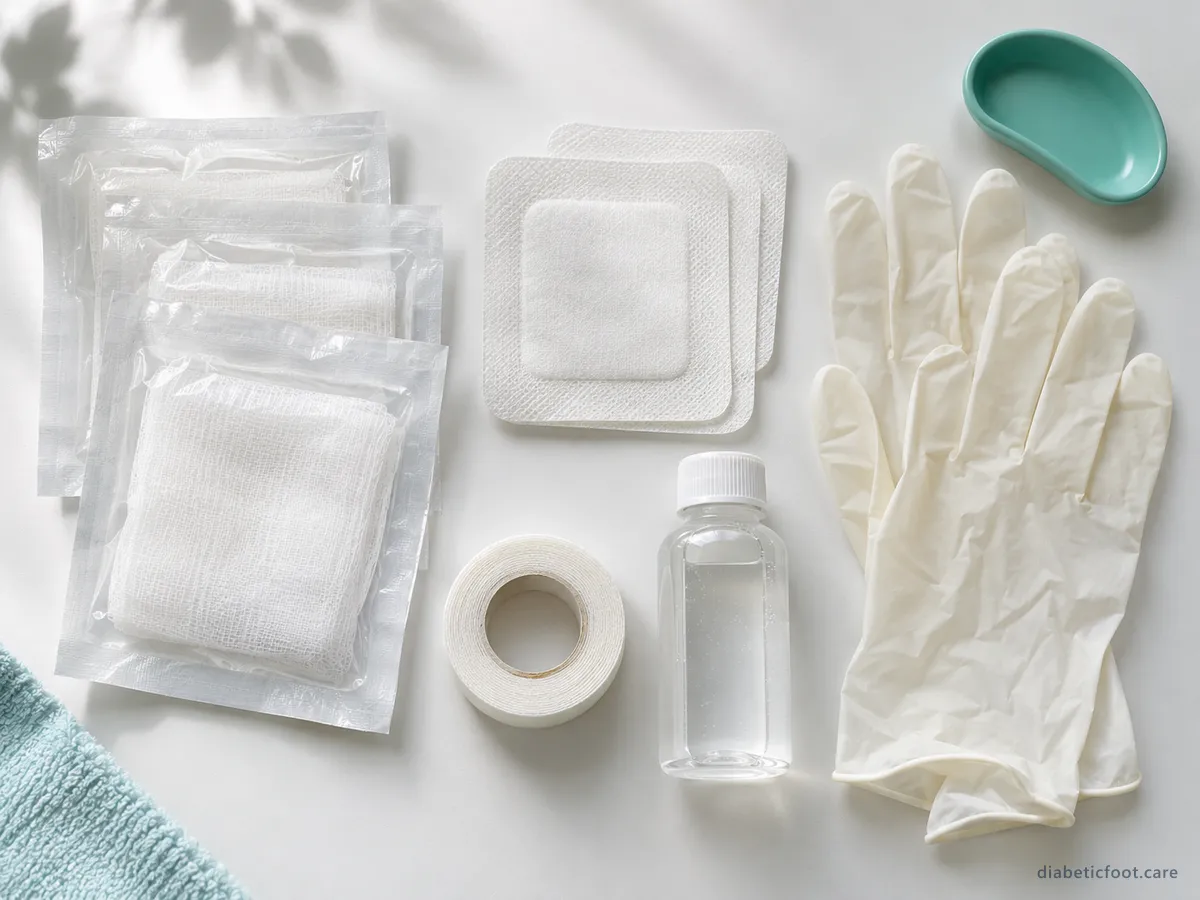
Your diabetic foot ulcer dressing plan comes first
A professional chooses your dressing after looking at your wound. NICE, which sets guidance for the NHS, says the choice should be based on that assessment and on what you prefer.1 A trained professional should also check the ulcer regularly. How often depends on how severe it is, whether it is infected and how much fluid it produces.2
Your dressing may be changed by a podiatrist, a district or community nurse, or the practice nurse at your GP surgery.34 Dressings are often supplied on prescription or brought by your nurse. If you or a carer have been shown how to change the dressing, follow the written instructions exactly. If you have not been shown how, leave the dressing alone.3
Types of diabetic foot ulcer dressing
Most modern dressings work by controlling moisture. They should soak up extra fluid (exudate) and keep the wound moist rather than dry.2 The main advanced dressings are alginate, film, foam, hydrocolloid and hydrogel. Antimicrobial dressings, such as iodine, honey or silver, are a separate group.5
| Dressing group | Examples | What guidance says |
|---|---|---|
| Advanced dressings | Alginate, film, foam, hydrocolloid, hydrogel | Hold in moisture or soak up fluid to protect the wound; little evidence to choose one type over another5 |
| Simple dressings | Basic wound contact layers, gauze | Gauze is no longer routinely recommended for long-lasting (chronic) wounds5 |
| Antimicrobial dressings | Silver, iodine, honey | Silver only when there are signs of infection5; not recommended to help ulcers heal6 |
| Sucrose octasulfate dressing | Specialist dressing | May be considered for some non-infected ulcers with reduced blood supply that are not improving6 |
The right dressing can change as the wound changes, so choosing one takes training and experience.5 The dressing matters far less than taking pressure off, removing dead tissue, treating infection and restoring blood flow. These are covered in our guide to diabetic foot ulcer treatment and healing.
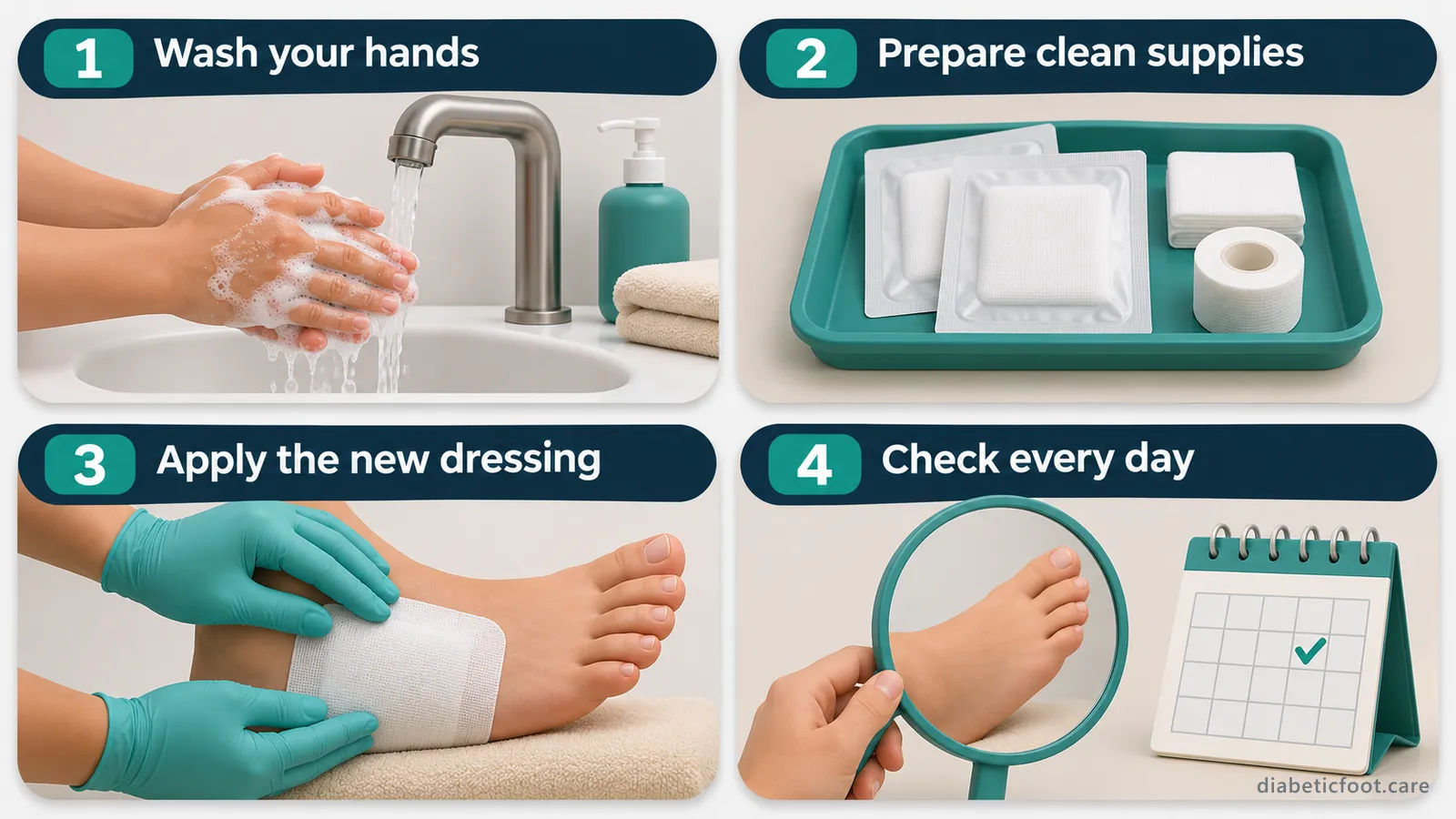
How to care for a diabetic foot ulcer at home
This checklist is based on advice from NHS foot clinics and international guidance:
- Wash your hands before and after touching the dressing. Clean hands help prevent infection.4
- Keep the dressing clean and dry. A wet dressing can slow healing and let germs in. A dressing protector can let you shower or have a bath safely.34
- Leave the dressing in place unless you have been shown how and when to change it, and have the right supplies.3
- Keep weight off the foot and wear your cast or boot as instructed (see below).3
- Check both feet every day, using a mirror or asking someone to help.7
- Take any medicines exactly as prescribed, including the full course of antibiotics, and tell your team about any side effects.3
- Work on your blood sugar with your diabetes team, because high blood sugar raises the risk of infection and slows healing.4
- Stop smoking, as it reduces blood flow to the foot.4
- Go to every appointment, even if the ulcer looks better.3
Keeping weight off the foot
A wound cannot heal while it is under constant pressure.3 Rest as much as you can, avoid standing or walking when you do not need to, and raise your foot if you have been told to.34 If you have a cast, walker boot or special shoe, wear it every time you put weight on the foot, even for short trips around the house.38
Do not wear your ordinary shoes over or instead of your offloading device.8 Wear proper footwear on your other foot too, because it takes extra pressure and can develop problems of its own.3
Do home remedies help diabetic foot ulcers?
Home remedies cannot replace professional care, and some can do harm. International guidance advises against honey or bee products, and against herbal dressings or creams, for healing diabetic foot ulcers.6 No NICE or international guidance supports vinegar, salt or other kitchen-cupboard treatments.
Do not soak your feet. Wash them, but do not soak them, because soaking can make the skin soggy and break down (maceration).2 Diabetes UK gives the same advice.7 Avoid corn plasters and blades on your feet.7 Never use leftover antibiotics, as antibiotics should not be used to prevent foot infection.1 If you want to use any product, even an ordinary plaster or cream, ask your foot team first.
Daily checks and when to get help
Each day, look at the skin around your diabetic foot ulcer dressing and check both feet for changes. NHS foot clinics list these danger signs of infection4:
- the foot feels hotter than usual or than the other foot
- swelling, or your shoe or boot feeling tighter
- redness, a blue tinge or mottled skin around the ulcer
- new or increasing pain or throbbing
- a new or unpleasant smell
- more fluid or pus coming from the ulcer
- new wounds anywhere on either foot
Learn more about how a diabetic foot infection is recognised.
Once your ulcer has healed, the risk of another one stays high. Keep up the routines in our everyday diabetic foot care guide.
Frequently asked questions
How often should a diabetic foot ulcer dressing be changed?
There is no single rule. It depends on the type of dressing, how much fluid the wound produces, whether there is infection and how severe the ulcer is. Your podiatrist or nurse will set a schedule and may change it as the wound improves. Do not change the dressing more or less often than you have been told without asking first.
Can I shower with a foot ulcer dressing?
Only if the dressing stays completely dry. NHS foot clinics advise against getting the dressing wet, because moisture can slow healing and let germs in. With a waterproof dressing protector, many people can shower or have a bath safely, and your podiatrist can advise on getting one. If your diabetic foot ulcer dressing does get wet, contact your team the same day for advice.
Should I leave a foot ulcer uncovered to let it air?
No. An ulcer should be kept covered with a dressing that manages fluid and keeps the wound moist, rather than left to dry out. An uncovered ulcer is also open to dirt, rubbing and knocks, which you may not feel if you have nerve damage. Keep your ulcer dressing in place as your team has told you.
Can I use honey or tea tree oil on a diabetic foot ulcer?
International guidance advises against honey, bee products or herbal remedies for healing diabetic foot ulcers, because the evidence does not support them. Putting them on yourself could also interfere with your prescribed dressing and hide changes in the wound. If you are interested in a particular product, talk to your podiatrist or nurse before using it.

Specialist assessment in Istanbul
Would you like a specialist opinion?
Assoc. Prof. Dr. Hüsrev Diktaş is an infectious diseases and clinical microbiology specialist in Istanbul with a clinical focus on diabetic foot infections. International patients can ask about an assessment directly.
References
- NICE. Diabetic foot problems: prevention and management (NG19), Recommendations. 2015, updated 2019. https://www.nice.org.uk/guidance/ng19/chapter/Recommendations
- International Working Group on the Diabetic Foot. Practical guidelines on the prevention and management of diabetes-related foot disease (IWGDF 2023 update). 2023. https://iwgdfguidelines.org/wp-content/uploads/2023/07/IWGDF-2023-01-Practical-Guidelines.pdf
- West Suffolk NHS Foundation Trust. Looking after your diabetic foot ulcer (patient leaflet). 2020. https://www.wsh.nhs.uk/CMS-Documents/Patient-leaflets/DiabetesUnit/6567-1-Looking-after-your-diabetic-foot-ulcer.pdf
- East Sussex Healthcare NHS Trust. Looking after your foot ulcer (patient leaflet). 2020. https://www.esht.nhs.uk/wp-content/uploads/2020/05/0807.pdf
- NICE. Chronic wounds: advanced wound dressings and antimicrobial dressings (ESMPB2). 2016. https://www.nice.org.uk/advice/esmpb2/chapter/Key-points-from-the-evidence
- International Working Group on the Diabetic Foot. Guidelines on interventions to enhance healing of foot ulcers in people with diabetes (IWGDF 2023 update). 2023. https://iwgdfguidelines.org/wp-content/uploads/2023/07/IWGDF-2023-07-Wound-Healing-Guideline.pdf
- Diabetes UK. How to look after your feet. 2024. https://www.diabetes.org.uk/about-diabetes/looking-after-diabetes/complications/feet/taking-care-of-your-feet
- International Working Group on the Diabetic Foot. Guidelines on offloading foot ulcers in persons with diabetes (IWGDF 2023 update). 2023. https://iwgdfguidelines.org/wp-content/uploads/2023/07/IWGDF-2023-06-Offloading-Guideline.pdf
- NHS. Sepsis. 2026. https://www.nhs.uk/conditions/sepsis/
This page gives general information for people in the UK. It is not a diagnosis and does not replace advice from your own GP, diabetes team or foot protection service. Medical disclaimer · How we write our content